
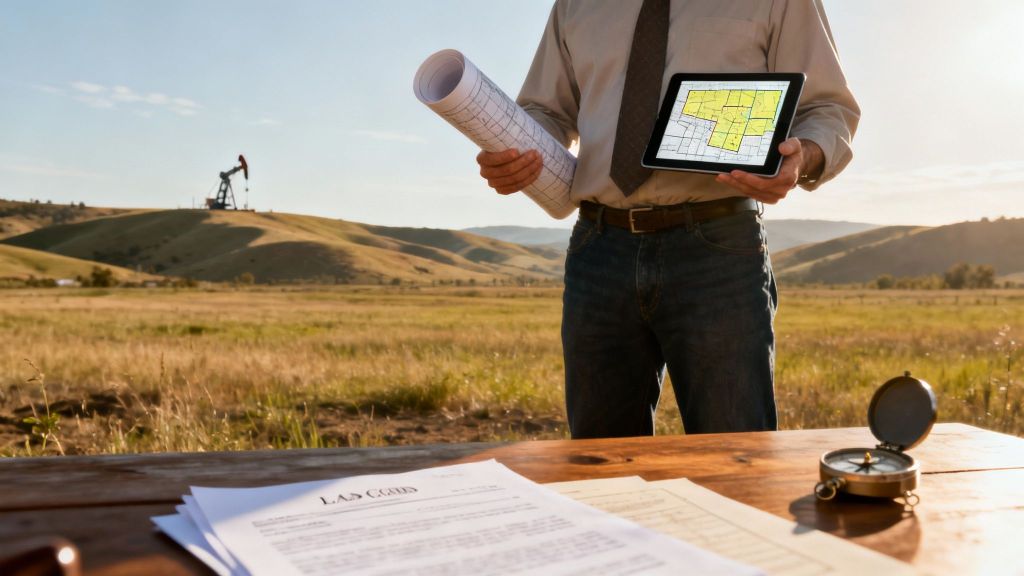
So, you’re thinking about becoming a landman. Before you jump in, it’s worth understanding what the job really is. Forget the stereotypes. This career is a unique mix of detective work, legal-eagle analysis, and high-stakes negotiation.
At its heart, a landman is the critical link between an energy company and the people who own the land where valuable resources lie.
What Does a Landman Really Do?
You're not just a negotiator. You're a researcher, a historian, and a relationship builder all rolled into one. The job revolves around a few core activities: identifying who owns what, digging through complex title records to prove it, and then striking a fair deal to lease those rights for energy exploration.
And no, this is not a typical 9-to-5 desk job. One day you might be buried in dusty deed books at a county courthouse, and the next you're sitting at a farmer's kitchen table, hashing out the details of a lease agreement.
A Look at the Day-to-Day
Predictability isn't really in the landman's vocabulary. Your schedule is driven by the project, not the clock.
A few key responsibilities pop up again and again:
- Title Research: This is the bedrock of the job. You'll spend countless hours in public records offices, meticulously tracing the ownership of both surface and mineral rights.
- Lease Negotiation: You’ll be the one crafting and negotiating agreements that work for both the landowner and your company. It's an art form.
- Due Diligence: Before a single drill bit touches the ground, you have to ensure every legal and regulatory box has been checked.
- Relationship Management: This is huge. Building trust and maintaining good relationships with landowners and local officials is non-negotiable for long-term success.
A High-Stakes, High-Reward Career
Being a landman demands a special blend of sharp analytical skills and genuine people skills. You have to be comfortable untangling complex legal histories, persistent when you hit a dead end, and a calm, clear communicator when there's serious money on the line.
To keep all this organized, modern landmen rely on specialized tools to manage the mountains of data. Using dedicated landman software isn't just a convenience anymore—it's essential for staying efficient and accurate.
The work you do has a massive economic ripple effect. The oil and gas industry supports nearly 11 million jobs in the U.S. and contributed almost $1.8 trillion to the national economy in 2021 alone. Landmen are right at the forefront of that activity, and the compensation reflects that importance. The average salary for a landman in the U.S. hovers around $115,705 per year. For more on the industry's economic impact, check out the data from API.org.
A great landman is a problem solver. They don't just see a tract of land; they see a web of history, ownership, and opportunity, and their job is to untangle it for everyone's benefit.
If you’re a self-starter who loves a good puzzle and genuinely enjoys connecting with people, this could be the path for you. It’s a challenging field, but for the right person, it’s an incredibly rewarding and impactful career.
Let's break down the key attributes of this career at a glance.
Landman Career Snapshot
Here’s a quick summary of what it takes and what you can expect.
| Attribute | Description |
|---|---|
| Average Salary | $115,705 per year in the United States |
| Education | Bachelor's degree in Energy Management, Business, or Law is common |
| Core Skills | Negotiation, title research, legal analysis, communication, relationship building |
| Work Environment | Mix of office work, courthouse research, and field visits with landowners |
| Key Certifications | RPL (Registered Professional Landman), CPL (Certified Professional Landman) |
| Industry Impact | Crucial role in the U.S. energy sector, which supports ~11 million jobs |
This snapshot gives you a good idea of the landscape. It's a demanding but well-compensated field for those with the right mix of grit and skill.
Building Your Educational Foundation
While grit and people skills are the fuel, a solid educational background is the engine that gets your career as a landman started. There isn't a single, mandatory degree that everyone has, but certain fields of study will give you a serious head start. Think of it as laying the groundwork—the stronger your foundation, the higher you can build.
This infographic breaks down the core workflow of a landman's job, from the initial deep dive into records all the way to securing that final agreement.
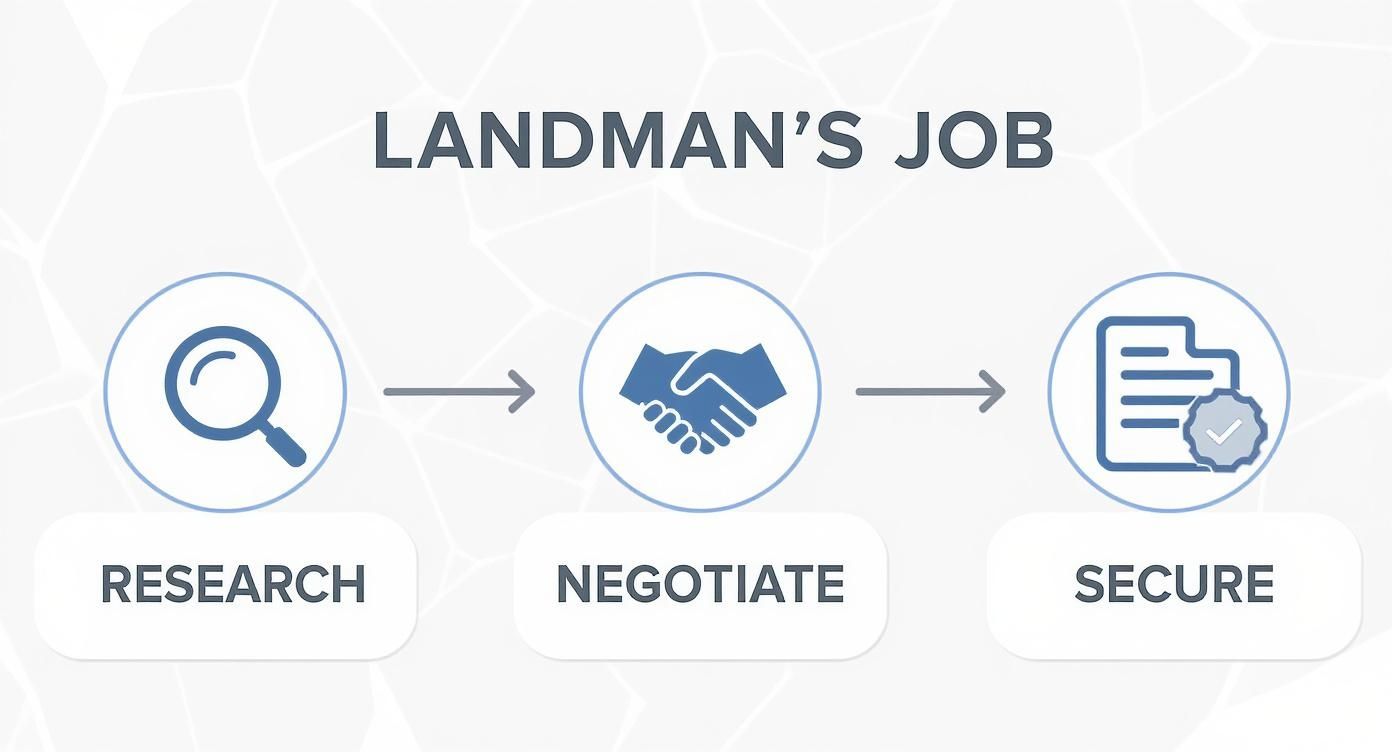
Every single step you see here hinges on a mix of what you learn in a classroom and the practical skills you sharpen in the field.
Degrees That Open Doors
If you're still planning your college route, the most direct path is a degree in Petroleum Land Management or Energy Management. These programs are purpose-built to create landmen. The coursework is a crash course in everything you’ll need: property law, contract negotiation, mineral rights, and oil and gas law. They are, hands down, the gold standard.
But don't worry, plenty of successful landmen get their start elsewhere. A Business Administration degree gives you a rock-solid base in finance, management, and negotiation—all daily tasks for a landman. A Law degree (or even a paralegal certificate) is obviously a huge advantage, since you’ll spend your days buried in dense legal documents and property rights issues.
The American Association of Professional Landmen (AAPL) notes that most folks in the field have at least a bachelor's. In fact, data shows about 60% of new landmen come in with a four-year degree. The other 40%? They often transition from other jobs in the energy sector, bringing invaluable hands-on experience with them.
No Specialized Degree? No Problem
So, your degree is in history or communications? You're not out of the running. Not even close. It's all about connecting what you already know to what the industry needs. A history major is a research pro—perfect for digging through old courthouse records for title work. A communications major? You’re probably a natural at building rapport and negotiating deals.
You can easily bridge any knowledge gaps.
- Take a few continuing education courses on property law or contract basics.
- Grab a post-graduate certificate in a field like paralegal studies.
- Frame your resume to highlight transferable skills like research, analysis, negotiation, and project management.
The best landmen I've worked with weren't always the ones with the fancy energy management degrees. They were the ones who were absolute masters of research, communication, and obsessive organization. Your degree gets you in the door; your skills are what build your career.
The Essential Skills Beyond the Classroom
Your diploma might land you an interview, but your skills are what will land you the job and keep you moving up. This role demands a unique mix of hard and soft skills you'll need to constantly refine.
Hard Skills You Must Master:
- Title Research: This is the bedrock of what we do. You have to be comfortable navigating dusty courthouse basements and complex digital databases to trace a property's ownership history.
- Legal Document Comprehension: You'll be reading complex legal documents all day—deeds, leases, mineral conveyances. You have to be able to understand not just what they say, but what they mean.
- GIS and Mapping: Having a good handle on geographic information systems (GIS) is a huge plus. It helps you visualize property lines and mineral rights, turning abstract data into something you can actually see.
- Financial Acumen: You're not just securing rights; you're making deals. Understanding lease economics, royalty calculations, and bonus payments is absolutely critical.
This is where the right tech makes a world of difference. Manually researching a title can take hundreds of hours of tedious work. That's why modern landmen use platforms like TitleTrackr to automate the grunt work of pulling data from legal documents. It can generate accurate reports in a tiny fraction of the time.
This doesn't replace your skills—it amplifies them. It frees you from administrative busywork so you can focus on high-level strategy and negotiation. By letting tech handle the repetitive stuff, you can manage more projects with better accuracy right from the start.
Gaining Your Competitive Edge
A solid education and the right skills will get your foot in the door, but that's just the starting line. To really build a lasting, profitable career as a landman, you need to set yourself apart from the crowd. It’s all about pursuing the right professional certifications and choosing a path that genuinely clicks with your personal and professional goals.
Earn Your Stripes With AAPL Certifications
In the world of land management, credentials from the American Association of Professional Landmen (AAPL) are the undisputed gold standard. Earning one signals to employers and clients that you’ve got a high level of expertise, you play by a strict code of ethics, and you’re serious about staying at the top of your game.
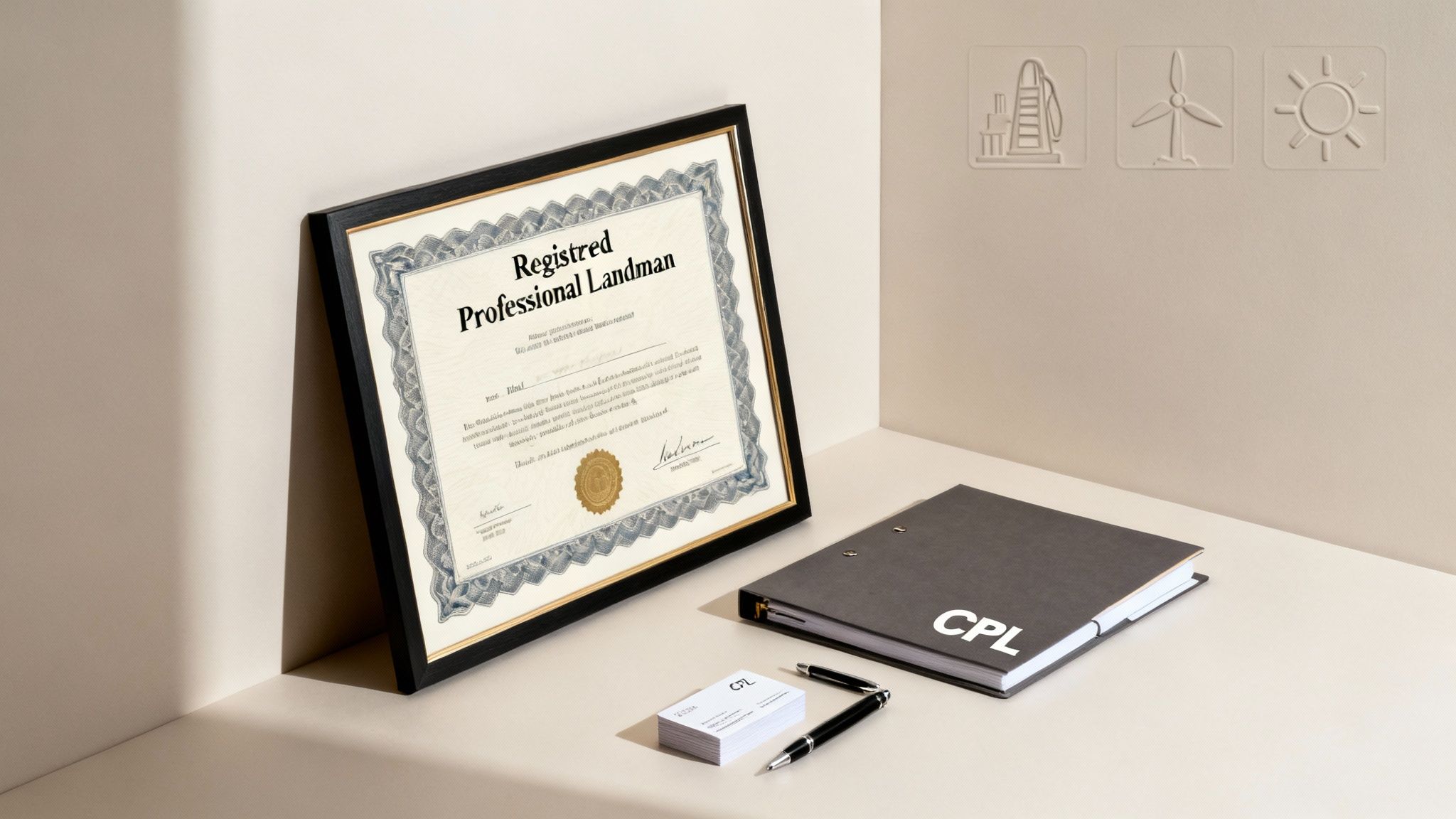
Two primary designations should be on your radar: the Registered Professional Landman (RPL) and the Certified Professional Landman (CPL).
- Registered Professional Landman (RPL): Think of this as your first major career milestone. Getting your RPL requires a four-year degree, at least three years of hands-on experience, and passing a comprehensive exam. It’s solid proof that you’ve mastered the fundamentals and are truly dedicated to the profession.
- Certified Professional Landman (CPL): This is the highest designation in the field, the pinnacle for a land professional. Qualifying for it is no small feat—you’ll need a minimum of ten years of experience, sponsorships from other CPLs, and to pass an even tougher examination. Holding a CPL opens doors to senior leadership roles and the most complex, high-stakes projects.
Holding a CPL isn't just about adding letters after your name. It's a clear signal to the industry that you've reached the pinnacle of the profession. This distinction often translates directly into higher earning potential and greater career opportunities.
Choosing Your Career Path
Once you’ve built that foundation, you’ll face a big decision: what kind of landman do you want to be? The two most common routes are working as an independent field landman or joining an energy company as an in-house landman. Each offers a completely different lifestyle, set of challenges, and rewards.
A field landman is basically an entrepreneur. You're your own boss, working on a contract basis for different clients, and you'll spend a ton of time on the road, digging through records in dusty courthouses, and meeting landowners face-to-face. This path gives you incredible flexibility and high earning potential, but it also comes with the hustle of finding consistent work and managing your own business.
On the flip side, an in-house landman is a direct employee. This role brings stability—a consistent salary, benefits, and a more structured corporate environment. You'll spend most of your time in an office, managing large-scale projects, overseeing the field landmen you hire, and contributing to long-term strategy. The work of title abstractors is also crucial here; you can learn more about the similarities and differences between these roles by exploring the duties of an abstractor.
Field Landman vs In-House Landman A Comparison
So, what does this look like in the real world? This table breaks down the key differences between the two main career paths for landmen.
| Aspect | Field Landman (Independent) | In-House Landman (Company) |
|---|---|---|
| Work Environment | Primarily on the road, in courthouses, and meeting with landowners. High autonomy. | Mostly office-based, with some travel. Collaborative team setting. |
| Compensation | Paid a day rate plus expenses; potential for very high income but less stability. | Salaried position with benefits, bonuses, and a predictable income stream. |
| Responsibilities | Hands-on title research, lease negotiation, and securing agreements directly. | Project management, overseeing contractors, strategic planning, and managing assets. |
| Career Path | Build a reputation to command higher rates and land larger projects. May start a brokerage. | Progress through corporate ladder to senior landman, land manager, or executive roles. |
Deciding between these paths comes down to your personality, risk tolerance, and long-term ambitions. There’s no right or wrong answer—just the one that’s right for you.
The Rise of Renewable Energy
The energy sector is evolving, and so are the opportunities for landmen. A growing number of professionals are now specializing in renewable energy projects like wind and solar farms. This isn't just a trend; it's a whole new frontier.
This work requires a different kind of expertise, digging into unique leasing structures, complex surface use agreements, and zoning regulations that are specific to renewables. As the world’s energy mix continues to diversify, landmen with this specialized knowledge are becoming incredibly valuable. They're carving out an exciting and future-proof niche in the profession.
How to Break Into the Industry
Having the right degree and certifications gets you in the game, but in the energy sector, breaking in often comes down to who you know. Building a solid professional network isn’t just a good idea—it’s a non-negotiable part of landing your first job.
Think of it as your first real project: locating opportunities, connecting with the right people, and securing the deal. In this case, the deal is your first role as a landman.
Forge Connections Through Industry Associations
Your very first move should be joining the American Association of Professional Landmen (AAPL) and whatever local chapter is nearest to you. This isn't just a suggestion; it's the central hub for the entire profession.
Attending their local meetings and regional conferences puts you in the same room with the exact people who can shape your career—from hiring managers to seasoned veterans. When you're at these events, don't be a wallflower. Your goal is to make real, meaningful connections.
- Introduce Yourself: Walk up to people, offer a firm handshake, and have a quick, memorable introduction ready.
- Ask Smart Questions: Skip the "can I have a job?" line. Instead, ask about their career path, their take on industry trends, or a particularly challenging project they worked on.
- Listen More Than You Talk: People remember a good listener. Show genuine interest in what they have to say.
Master Your Digital Handshake on LinkedIn
In this business, LinkedIn is your digital resume, networking tool, and research platform rolled into one. A generic, half-filled-out profile won't do you any favors. You need to meticulously craft it for a landman role.
Start with a professional headshot. Then, write a headline that clearly states your goal, like "Aspiring Field Landman | Energy Management Graduate."
But just having a profile isn't enough. You have to be active. Identify land managers, recruiters, and independent landmen in your target area and send personalized connection requests. Mention a mutual connection, a recent company project, or something they posted to show you’ve actually done your homework.
Securing an informational interview is a fantastic, low-pressure way to get on someone's radar. It’s not a job interview—it’s a fact-finding mission that lets you build rapport and gain invaluable insider knowledge.
Craft a Resume That Speaks the Language
Your resume needs to scream "landman," even if you’ve never officially held the title. This means translating your past experience into the skills that matter most in this industry: research, negotiation, project management, and a sharp eye for detail.
For example, if you worked in real estate, you'd want to highlight your experience with title searches and contract negotiations. If you come from a sales background, focus on your track record of building client relationships and closing complex deals.
Always quantify your achievements. Instead of saying you "managed accounts," say you "managed 25 client accounts valued at over $2 million." Numbers talk.
The profession is constantly bringing in new talent. In fact, 28% of landmen have less than one year of experience, and another 34% have between one and two years. This shows a healthy flow of newcomers and plenty of opportunities to get your foot in the door. Demographics also show the field is growing, with the number of women in the profession increasing by about 5% over the past decade. You can dig into more stats in the full compensation survey data on Zippia.com.
Gain Practical Experience with Entry-Level Roles
While a full-fledged landman role is the end goal, internships and entry-level positions like Land Technician or Land Assistant are often the quickest way in. These roles are invaluable.
You’ll learn the ropes by supporting senior landmen, helping with document prep, organizing files, and getting a firsthand look at the entire leasing process from start to finish.
This kind of experience is more than just another line on your resume. It proves your commitment, lets you apply what you learned in college to the real world, and helps you expand your network from the inside. Many companies would rather promote from within, making these roles the perfect launchpad for a long and successful career.
Thriving in Your First Year as a Landman
Your first year on the job will feel like a trial by fire. This is where all the theory you learned in school crashes head-on into the often messy reality of the field.
Landing the job is one thing; thriving in it is another. Your ability to navigate this initial whirlwind will set the stage for your entire career.
Here's the secret: that first year is less about knowing all the answers and more about knowing how to find them. You'll be juggling courthouse research, tense conversations with landowners, and the intricate details of your first lease negotiations. It’s a steep learning curve, but every challenge builds the resilience that defines a successful landman.
Mastering the Core Challenges
Your first 12 months will be a masterclass in multitasking and problem-solving. While every project is different, a few universal hurdles will definitely land on your desk. Expect to grapple with these early on.
- Courthouse Research: You will spend countless hours in dusty, sometimes poorly organized county record rooms. Learning to efficiently navigate archaic filing systems and decipher centuries-old handwriting is a skill that only comes with practice.
- Difficult Conversations: Not every landowner will be happy to see you. You'll learn to handle skepticism, outright hostility, and tough questions with poise and professionalism. Your ability to build rapport under pressure is everything.
- Negotiation Nuances: Your first few lease negotiations will be nerve-wracking. The key is to be meticulously prepared, understand your client's bottom line, and listen more than you talk.
This period is all about building your confidence and your reputation one successful interaction at a time. It requires patience and a thick skin.
The One Skill That Defines Success
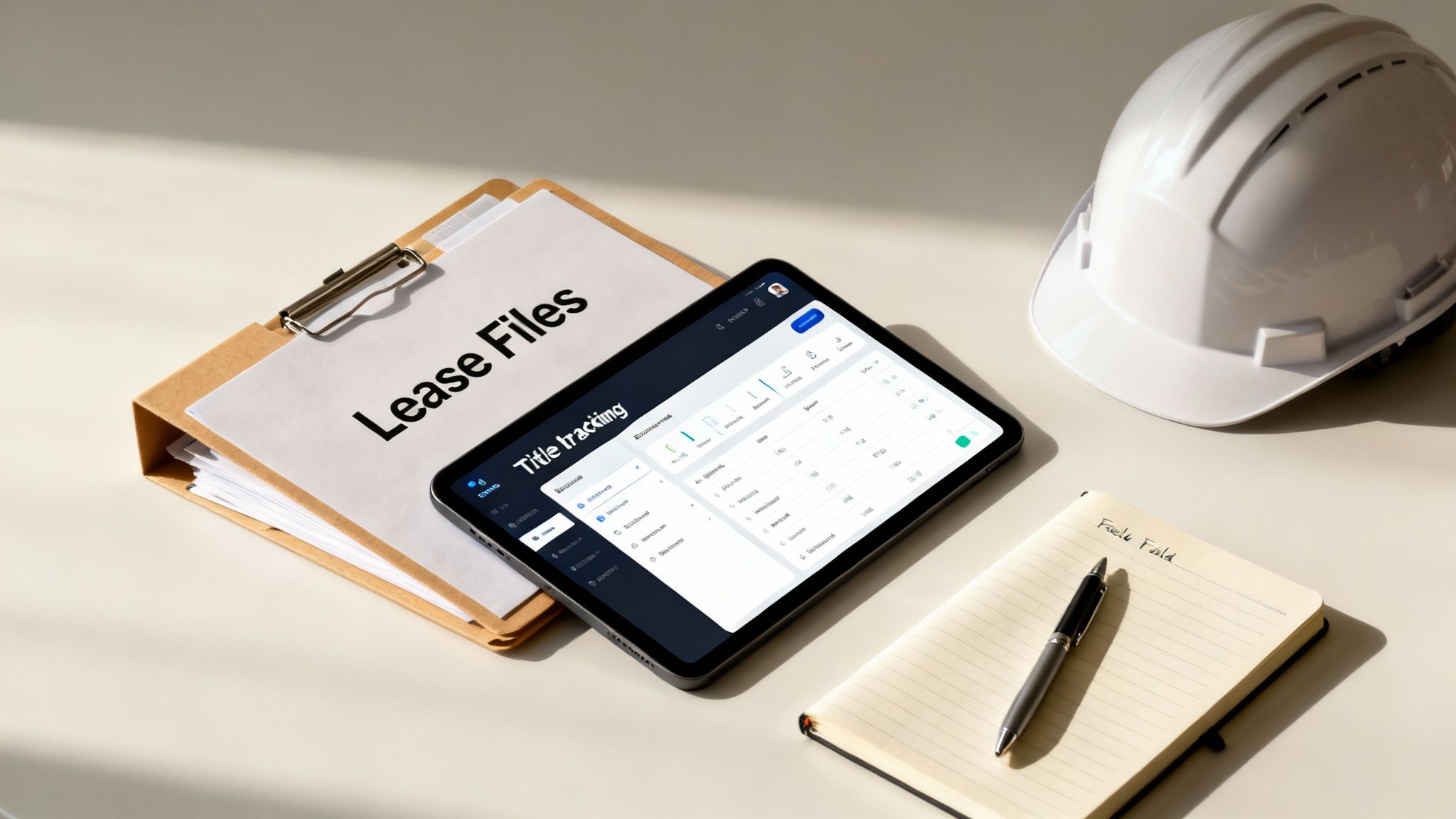
While negotiation and research skills are vital, the single most important trait separating struggling rookies from successful newcomers is organization.
The sheer volume of documents, deadlines, and details you'll manage can be overwhelming. Dropping the ball on a single filing date or misplacing a critical deed can have huge financial and legal consequences.
This is where relying on outdated methods like spreadsheets and stacks of physical files becomes a serious liability. The margin for human error is just too high. Modern landmen understand that technology isn't a crutch—it's a force multiplier that lets them perform with the accuracy of a seasoned pro from day one.
"My best piece of advice for a new landman is simple: become a master of organization. Your reputation is built on your reliability and attention to detail. Never let a crucial piece of information slip through the cracks because you didn't have a solid system to manage it."
This is precisely why adopting a modern platform is no longer optional. Tools designed for land professionals are non-negotiable for anyone serious about building a long-term career.
How Technology Amplifies Your Skills
Imagine running your first complex title chain. Manually, this involves days of painstaking research and cross-referencing hundreds of pages of legal documents. A single oversight can derail the entire project. This is where a platform like TitleTrackr becomes your most valuable asset.
Instead of burning time on tedious data entry, you can use an AI-driven tool to pull critical information from deeds, leases, and conveyances in seconds. It helps you dodge common rookie mistakes by ensuring every detail is captured accurately. This frees you up to focus on what truly matters: strategy, negotiation, and building relationships.
Using software like TitleTrackr allows you to:
- Manage Records Flawlessly: Keep every document, contact, and deadline organized and easily accessible from a single dashboard.
- Track Progress with Clarity: Get a clear, real-time view of every project, ensuring you and your team are always on the same page.
- Run Title with Confidence: Generate accurate, professional reports that mirror the quality of someone with years of experience.
Technology doesn't replace your skill; it amplifies it. By automating the low-level tasks, you free yourself up to perform at a higher level from your very first day. This not only makes you more efficient but also shows a level of professionalism that will get you noticed and trusted by clients and employers alike. Adopting the right tools early is the smartest investment you can make in your career.
Common Questions About Becoming a Landman
Even with a solid roadmap laid out, you’ve probably still got some questions about what it’s really like to be a landman. That’s completely normal. It’s a complex job, and the day-to-day reality isn’t always what you see on TV.
Let's dig into some of the most common questions I hear from people just starting out. These are the practical, boots-on-the-ground concerns that pop up when you get serious about this career.
How Much Travel Is Really Involved?
This is a big one, and the answer is simple: it depends entirely on your role.
A field landman is going to be on the road. A lot. You could spend weeks or even months living out of a hotel in a small town close to a new play, with your days spent in county courthouses and evenings meeting landowners at their kitchen tables.
On the flip side, an in-house landman has a more predictable, office-based life. Sure, they'll travel for big meetings, site visits, or industry conferences, but most of their work happens at corporate headquarters. Your comfort level with a nomadic lifestyle is a huge factor in which path you choose.
What Is the Work-Life Balance Like?
Forget the standard 9-to-5, especially if you're in the field. When a project is hot, the hours are long. You'll likely work weekends and late nights to hit a deadline or to catch a landowner after they get off work. This is the "feast" part of the classic feast-or-famine cycle you see in project-based work.
When things slow down between projects, you'll have more downtime and flexibility, but it also means you have to be smart with your money. In-house roles, however, usually offer a much steadier schedule that looks more like a typical corporate job.
The lifestyle of a landman often gets the Hollywood treatment, like in the Paramount+ series Landman, which dives into the high-stakes world of Texas oil and gas. While the show nails the intensity, the real job involves a lot more painstaking research and patient relationship-building than dramatic standoffs.
Is It a "Good Ol' Boys Club"?
The energy industry has a reputation for being male-dominated, and historically, that was true. But things are changing fast. You'll still find some old-school pockets here and there, but the industry as a whole is making real progress toward being more inclusive. Today, you’ll find sharp, successful landmen from every background imaginable.
What truly matters in this field isn't who you know, but what you can deliver. Your reputation is built on your accuracy, your work ethic, and your integrity. Companies want reliable pros who get the job done right, period. If you want to dive deeper into how the profession is evolving, you can find answers to other common inquiries by checking out our comprehensive landman FAQ page.
Can I Start This Career Later in Life?
Absolutely. In fact, being a landman is an excellent second career for many people. If you have a background in real estate, law, sales, or even the military, you’ll find your skills translate incredibly well.
Professionals who start later in life bring maturity, real-world experience, and a steady hand to negotiations—all invaluable assets when you're sitting across from a landowner. The ability to connect with people from all walks of life is a skill that only gets better with age. Your past experience isn't a drawback; it's your competitive edge.
Ready to start your career with the accuracy of a seasoned professional? The right technology is your biggest advantage. TitleTrackr uses AI to automate the tedious work of title research, helping you manage documents, track progress, and generate professional reports from day one. See how it can amplify your skills and request a demo with TitleTrackr today.
 blog.titletrackr.com
Leave a comment