

Figuring out who actually owns a piece of property is the first, most fundamental step of any real estate deal. This usually means digging into public records to look at deeds and titles. It’s a process called a title search, and its whole purpose is to confirm the legal owner and sniff out any claims, liens, or old disputes that could trip up the sale.
Think of it less as a box to check and more as essential armor for your investment, protecting you from nasty surprises down the road. For title professionals, investors, and legal teams, mastering this process is non-negotiable.
Why Verifying Property Ownership Is So Critical
Before we get into the "how," let's lock in the "why." Skipping a thorough ownership check isn’t a minor oversight—it’s a massive gamble with serious financial and legal stakes.
Imagine a homebuyer who gets a knock on their door a few months after closing, only to discover an heir from a previous owner has a legitimate claim to the house. Or an investor who finds out they've also bought a $30,000 mechanic's lien because a contractor was never paid for a kitchen remodel ten years ago. These aren't just hypotheticals; they are real-world nightmares that completely derail transactions and drain bank accounts.
The Foundation of a Secure Deal
When you neglect this foundational step, you open the door to a whole host of problems that can kill a deal and create years of headaches. The risks are very real:
- Deals Fall Apart: An unexpected title dispute, like an unresolved divorce settlement or a forgotten mortgage, can stop negotiations dead in their tracks.
- Surprise Liens and Claims: You could suddenly be on the hook for old debts tied to the property. We're talking unpaid taxes, contractors' liens, or even judgments against a former owner.
- Outright Fraud: In the worst-case scenario, you could buy a property from someone who never had the legal right to sell it in the first place.
Verifying ownership is the absolute bedrock of a secure real estate transaction. It turns an assumption into a hard fact, giving you the clarity to move forward with confidence instead of walking into a costly legal battle.
A Global Perspective on Property Rights
The need for clear, verifiable ownership goes way beyond a single deal. It's actually a cornerstone of economic stability and growth. The 2025 International Property Rights Index (IPRI), which analyzed data from 126 countries, found a direct line between strong property rights and economic prosperity.
In fact, the average income in countries with the strongest protections is a staggering 21 times greater than in those with the weakest. It's a powerful reminder that a reliable system for checking property ownership isn't just about protecting one transaction; it's about building a trustworthy and thriving market for everyone. You can dig into the full report and see more of these global correlations on the International Property Rights Index website.
Digging into Public Records to Uncover Ownership Details
The old-school way of checking property ownership means rolling up your sleeves and diving into public records. This is the official ledger for every piece of land, and your journey almost always starts at a local government office—think the County Recorder or County Clerk. This is where the paper trail of a property's entire life is stored, either in physical books or, increasingly, in digital archives.
These offices are the gatekeepers of deeds, mortgages, liens, and all the other documents that tell a property's story. Getting your hands on them is the heart of a manual title search. But what sounds simple enough on paper can quickly turn into a real-world puzzle.
Knowing Which Documents to Look For
Once you're at the right office (or on their website), you can't just ask for "everything." You need to know exactly what you’re looking for. Each document reveals a different piece of the ownership puzzle, and some are more critical than others.
Here's what you'll be hunting for:
- Deeds: This is the big one. It's the legal instrument that officially transfers ownership from a seller (the grantor) to a buyer (the grantee). You'll run into different kinds, like a General Warranty Deed (which offers the most protection for the buyer) or a Quitclaim Deed (which offers the least).
- Mortgages: These records track any loans tied to the property. An unpaid mortgage creates a lien that sticks to the property until it’s paid off—a massive detail for any potential buyer.
- Liens: It's not just about mortgages. A property can have other claims against it for unpaid debts. We're talking about tax liens from the government, mechanics' liens from contractors who weren't paid, or even judgment liens stemming from lawsuits.
- Easements and Covenants: These documents give specific rights to people who don't own the property, like a utility company needing access to power lines. They can also put restrictions on how the land can be used.
The infographic below gives you a bird's-eye view of how this process works—from spotting risks to checking the records and finally securing your investment.
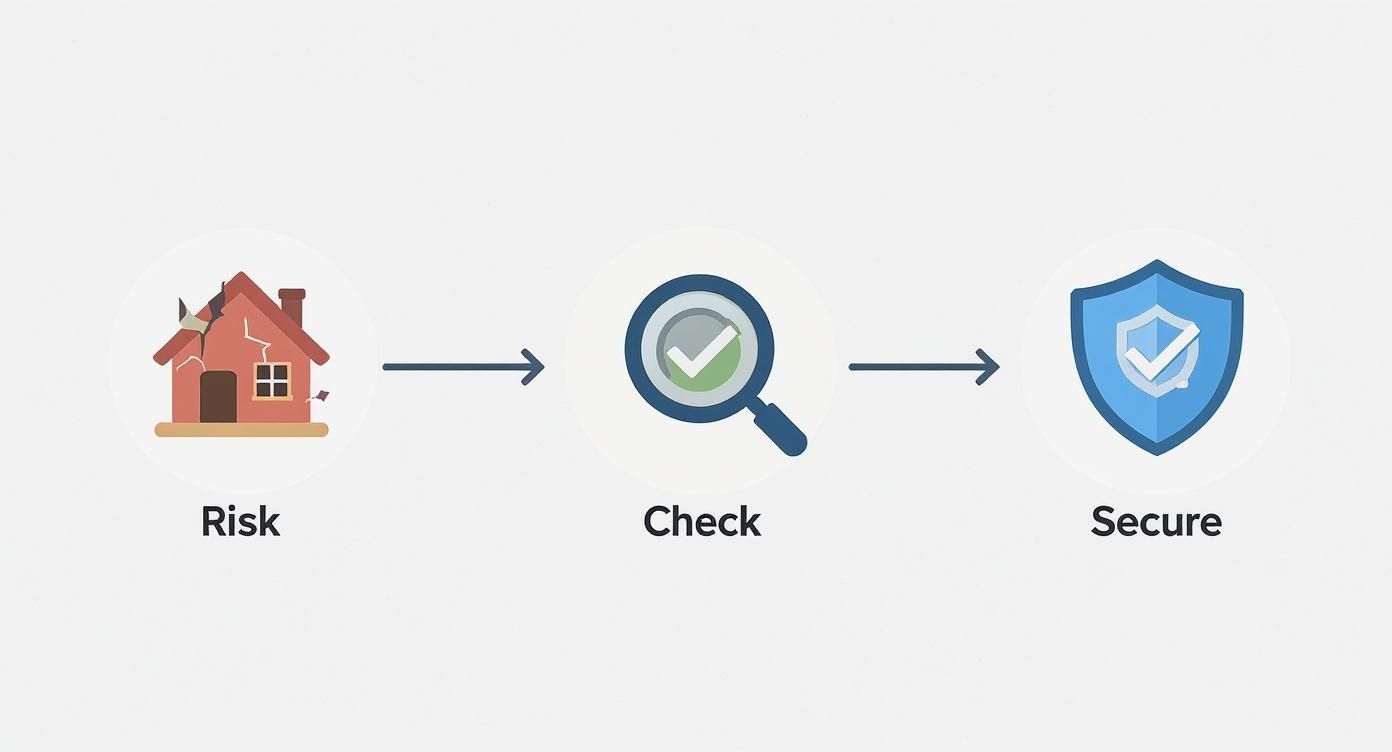
This flow looks simple, but navigating it requires a careful read of all those key documents to confirm you're getting a clean title.
The Headaches of a Manual Search
This boots-on-the-ground approach to checking property ownership quickly shows its cracks. Many county offices are wrestling with records that go back decades, sometimes even centuries. That often means you're stuck digging through dusty old ledgers or trying to make sense of clunky, outdated online portals that are a nightmare to search.
The biggest roadblock in manual searches is almost always fragmented or incomplete data. You might find the deed from 1985, but the record showing the mortgage was paid off in 1992 could be misfiled or just plain missing from their digital system.
These gaps create huge uncertainty. For instance, a "Transfer on Death Deed" (TODD) might be floating around, which lets an owner pass property directly to an heir and skip probate court. If that document wasn't recorded correctly or is hard to find, it can spark a major title dispute down the road.
The hard truth is that manual verification is painfully slow, wide open to human error, and requires you to know the weird quirks of local record-keeping. Every missing document or confusing entry adds hours to your workload and piles on more risk, making a strong case for a much more efficient and reliable method.
How to Read and Understand Title Documents
So you’ve tracked down the right documents. That’s a huge first step, but the real work is just beginning. Now you're staring at dense, jargon-filled pages that feel like they’re written in another language entirely. Making sense of this paperwork isn't just a suggestion—it's absolutely critical for a secure and successful transaction.
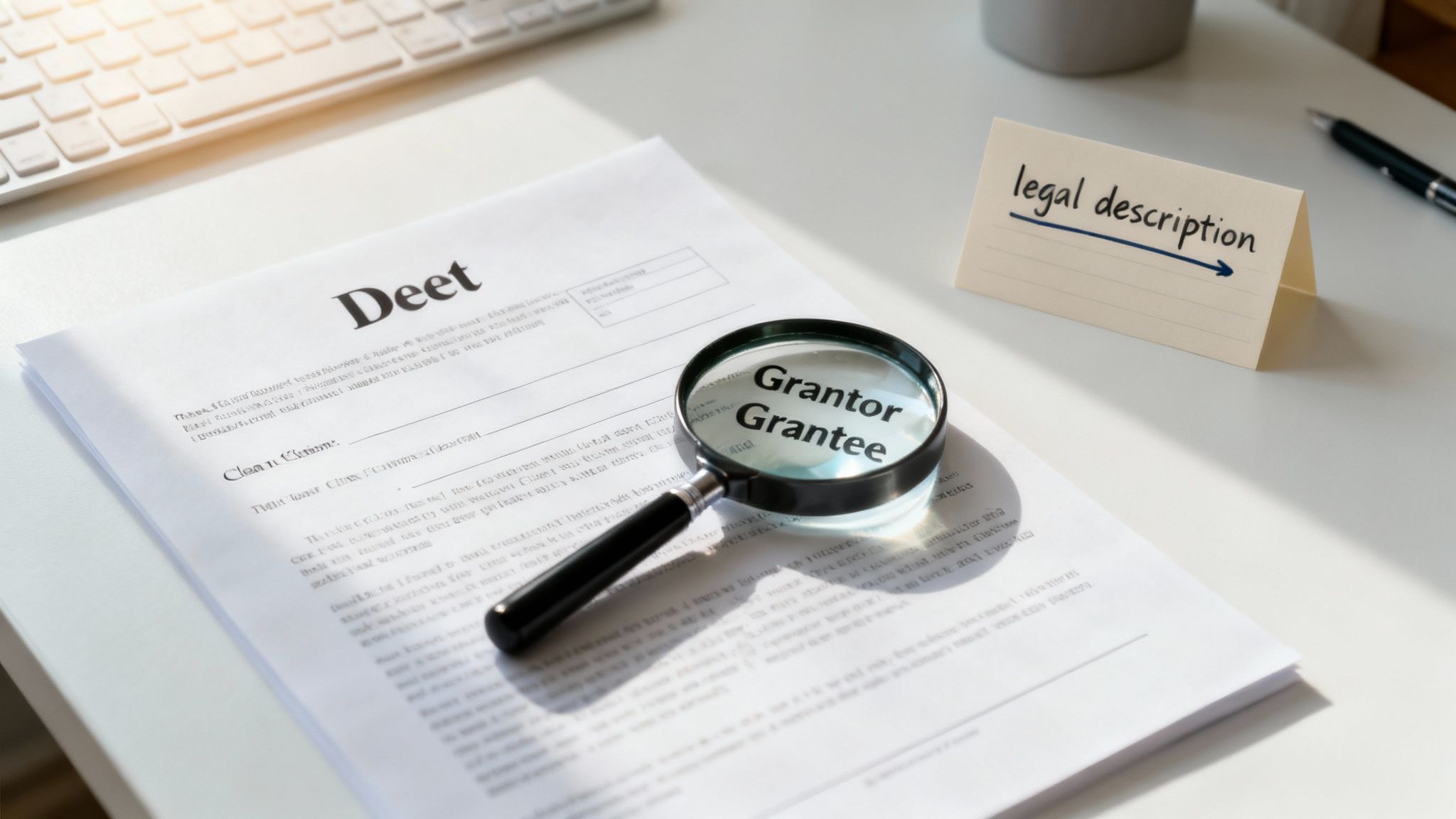
The property deed is the star of this show. Think of it as the legal instrument that officially passes the baton of ownership from one person to another. If you can learn to read its components, you can unlock the story of a property's history.
Decoding the Language of a Deed
Every deed, no matter the type, follows a certain structure. Once you get the hang of it, you can quickly pull out the most important details and spot potential red flags during an ownership check.
You’ll encounter a few key players in every standard deed:
- Grantor: This is simply the seller—the current owner transferring the property.
- Grantee: This is the buyer, the one receiving the property.
- Legal Description: Don't mistake this for a street address. This is a very precise, formal description of the property’s exact boundaries, often using systems like metes-and-bounds or lot-and-block.
- Consideration: This clause spells out what was exchanged for the property. Usually, it's just the sale price.
The accuracy of the legal description is completely non-negotiable. Even a small typo can create what's called a "cloud on title"—a fancy term for a major ownership dispute that can blow up a sale or force you into costly legal battles to clear it up.
Getting these terms down is a great start. But you also need to know that deeds come with different levels of protection for the buyer. This is a critical distinction that directly impacts the amount of risk you’re taking on.
Comparing Common Types of Property Deeds
Not all deeds are created equal. Far from it. The type of deed used in a sale dictates the promises—or covenants—the seller is making about the property's title. Some offer an ironclad guarantee, while others offer basically nothing, leaving the buyer to carry all the risk.
The differences are huge, so it pays to know what you’re looking at.
Here's a quick breakdown of the most common deed types you’ll run into when you’re checking property ownership.
Comparing Common Types of Property Deeds
| Deed Type | Grantor's Promise | Level of Buyer Protection | Common Use Case |
|---|---|---|---|
| General Warranty Deed | Guarantees a clear title for the entire history of the property. | Highest | Standard residential and commercial sales. |
| Special Warranty Deed | Guarantees a clear title only during the grantor's ownership period. | Medium | Commercial transactions or sales from an estate. |
| Quitclaim Deed | Makes no promises about the title; simply transfers whatever interest the grantor has. | Lowest | Transferring property between family members or clearing up a title issue. |
Understanding these distinctions is crucial. A General Warranty Deed gives you the most peace of mind, while a Quitclaim Deed should be a major red flag in a standard sale.
Recognizing Different Ownership Structures
Finally, pay close attention to how the property is owned. The deed will tell you if it's owned by one person, a married couple, a group of investors, or an entity like a trust. This structure directly impacts how the property can be sold or transferred down the line.
For example, a phrase like joint tenancy with right of survivorship means that if one owner passes away, their share automatically goes to the surviving owner(s), completely bypassing probate court. This is a massive detail that professional title abstractors always look for, because it defines the legal chain of command and confirms who actually has the authority to sell.
Misinterpreting these ownership structures is an easy—and very costly—mistake to make.
Let Technology Do the Heavy Lifting with TitleTrackr
If you've ever spent hours trying to make sense of a century-old deed or wrestling with a clunky county website, you know there has to be a better way. The old-school approach to checking property ownership is painstaking, slow, and full of potential pitfalls. This is exactly where a modern tool like TitleTrackr comes in, turning a frustrating manual process into a fast, accurate, and reliable workflow.
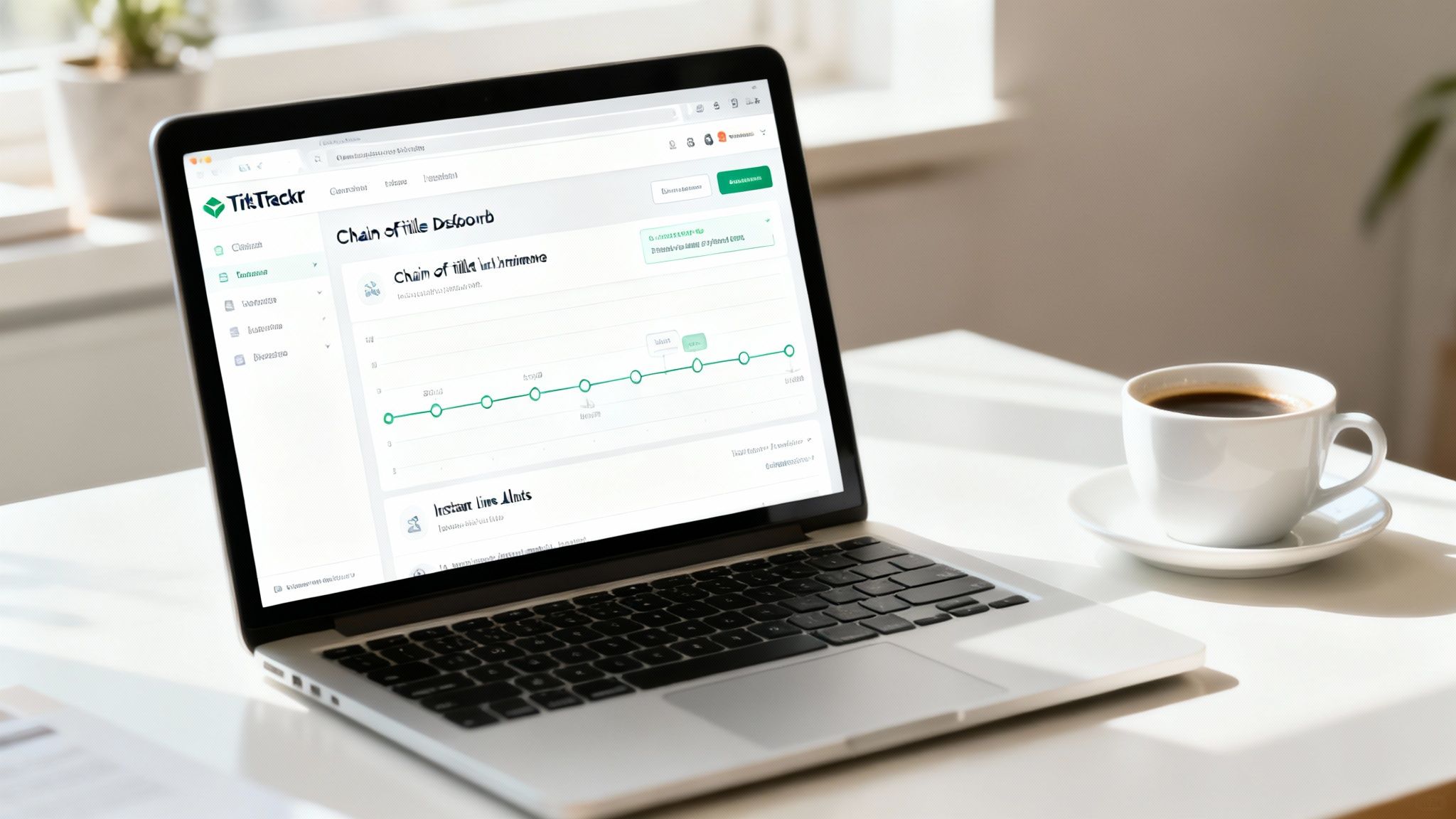
Instead of you spending days chasing down records across dozens of databases, TitleTrackr automates the entire search. It instantly taps into thousands of sources, pulling all the relevant data together into a single, comprehensive report. This is the key to unlocking massive efficiency gains and dodging the human error that so often trips up manual searches.
The Power of Automated Due Diligence
The real win here isn't just speed—it's the depth and accuracy of the information you get. TitleTrackr digs deeper than a simple name search, giving you critical insights you might otherwise miss completely.
Here are a few features that truly change the game for ownership verification:
- Automated Chain of Title Analysis: The platform pieces together the entire ownership history for you, automatically flagging any gaps or weird inconsistencies that could point to a title defect.
- Instant Lien and Encumbrance Detection: TitleTrackr actively scans for mortgages, tax liens, judgments, and easements. You get a clear, immediate picture of any claims against the property.
- Comprehensive Reporting: Forget about manual report building. All findings are neatly compiled into a clean, professional report that’s easy to read and share with clients or colleagues.
This modern approach is more important than ever. Think about the massive generational transfer of wealth that's constantly churning property records. Back in 1991, the Silent Generation held about 65% of all U.S. real estate. By 2025, that number is expected to plummet to just 9%.
With Baby Boomers, Gen X, and Millennials now holding the majority, the sheer volume and complexity of title transfers have exploded. Having a reliable verification system isn't a luxury anymore; it's a necessity.
Get Clarity with a Centralized Dashboard
TitleTrackr takes all this messy, complex data and organizes it into a clean, intuitive dashboard. This single screen gives you a complete overview of a property's history at a glance. No more juggling a dozen browser tabs or stacks of paper.
This centralized view lets you immediately identify the current owner, see any active liens, and access the full chain of title. It makes your due diligence process both incredibly thorough and shockingly efficient.
By pulling all the essential data points into one place, you can go from confusion to clarity in seconds. This is the modern solution for fast, reliable, and exhaustive due diligence that lets you make smarter decisions with total confidence.
Ultimately, the goal is to save you time, slash your risk, and give you access to data that was previously a nightmare to find. If you're ready to see how this can transform your own workflow, you can start your TitleTrackr free trial and experience the difference for yourself.
Solving Common Problems in a Title Search
Even the most straightforward property ownership check can hit a wall. History gets messy, and public records aren't always perfect. If you're not ready for the curveballs, these issues can bring a deal to a grinding halt.
One of the classic headaches is a break in the chain of title. This is just what it sounds like—a missing link in the property's ownership timeline. A common culprit? An heir inherits a property, but the new deed is never officially filed. Years later, you're left staring at a gap in the records, trying to piece together a story with a missing chapter.
Navigating Tricky Ownership Scenarios
Beyond simple gaps, you’ll run into more tangled situations that demand a much closer look. These aren't just clerical errors; they can have real implications for how the property can be used.
- Surprise Easements: You're digging through the records and suddenly find an old easement. It might grant a neighbor the right to use your driveway or give a utility company permanent access to a strip of the land. It’s not an ownership claim, but it definitely affects what you can do with the property.
- Properties Held in a Trust: If a property is in a trust, confirming the trustee's name is just the beginning. You have to verify that they actually have the legal authority to sell it, which usually means getting your hands on the trust documents themselves.
- Conflicting Public Records: It happens more than you'd think. The county tax assessor's office lists one owner, but the official deed filed with the recorder lists someone else. This is often due to a lag after a recent sale or simple clerical mix-ups, and it requires you to play detective and cross-reference everything to find the truth.
When you hit a roadblock like a missing document or conflicting names, don't panic. The next move is to methodically widen your search. A record that’s missing from one county database might pop up in another. This is where a platform that pulls from multiple sources becomes your best defense against dead ends.
When to Call for Backup
Some problems can be solved with persistence and deeper research. Others are giant, flashing red flags telling you it's time to bring in a real estate attorney.
A serious boundary dispute with a neighbor, a contested will that throws ownership into question, or any hint of fraud are all situations that need legal expertise. Don't try to be a hero; these issues can spiral out of control fast.
These challenges highlight just how complex property ownership can be, and it varies wildly across the globe. In the U.S., the homeownership rate sits around 65.9%, but in a country like Kazakhstan, it’s closer to 98%. Affordability plays a huge role; a typical home in the UK costs about nine times the average salary, while it's about eight times in the U.S. You can explore more of these fascinating global trends on this property insights site.
These international differences just go to show why having a bulletproof system for checking ownership of a property is so essential.
Using a platform like TitleTrackr helps you spot these red flags early on. It gives you the data you need to either solve the minor issues yourself or recognize when it’s time to call in the legal experts—long before a problem has a chance to blow up a deal.
Answering Your Top Questions on Property Verification
Let's dig into some of the most common questions that pop up when checking property ownership. These are the details that can trip people up, so getting clear, straightforward answers is key to moving forward with confidence.
How Long Does a Property Ownership Check Usually Take?
Honestly, the timeline can be all over the map. It really depends on the path you take.
If you go the old-school route and head down to the county recorder's office, you could be there for hours. If the property has a long or complicated history, that search could easily bleed into a second or third day. You're at the mercy of physical records and outdated filing systems.
On the flip side, a modern platform like TitleTrackr can spit out a comprehensive preliminary report in just a few minutes. This is a game-changer. It compresses days of tedious legwork into a coffee break, letting you focus on the actual deal instead of drowning in paperwork.
Are Online Public Records Reliable Enough?
They can be a decent place to start, but you have to take them with a huge grain of salt. Their reliability is only as good as the local government's commitment to keeping those digital files updated.
It's not unusual to find online portals with incomplete data, outdated entries, or even conflicting information. Making a big financial decision based on that kind of shaky foundation is just asking for trouble. This is exactly where professional-grade tools prove their worth—they pull from multiple, verified databases to stitch together a much more accurate and complete picture of a property's true history.
A title search is the investigation—the nitty-gritty work of digging into a property's past for claims or liens. Title insurance is the safety net you get after the search. Think of it as a policy that protects you financially if some hidden title issue crawls out of the woodwork later. A great search is the first step to getting solid insurance.
Can I Legally Look Up the Owner of Any Property?
For the most part, yes. In the United States, property ownership records are considered public information. You generally have the right to search for any property's details at the relevant government office or through its online portal.
Just be aware that the ease of access and the amount of detail you can get varies wildly from one county or state to the next. Some make it incredibly simple, while others feel like they're making you jump through hoops. If you have more specific questions about the verification process, you can find a ton of helpful info on the TitleTrackr frequently asked questions page.
What Is a Transfer on Death Deed?
A Transfer on Death Deed (TODD) is a legal instrument that lets a property owner name a beneficiary to inherit their real estate directly when they pass away, sidestepping the often long and expensive probate process.
Finding one of these during a title search is critical. If a TODD exists but was never properly recorded—or worse, gets missed entirely during the search—it can create a massive title dispute down the road. It represents a future claim on the property that isn't always obvious from a standard deed review, which is why a truly thorough investigation has to go deeper than just the surface-level documents.
Ready to stop burning hours on manual searches and start getting instant, reliable ownership data? TitleTrackr completely changes the game, giving you the clarity and confidence to close deals faster and with way less risk.
 blog.titletrackr.com
Leave a comment