

A release of mortgage is the official legal document that proves a home loan has been completely paid off. For title companies, lenders, and real estate professionals, it’s the critical final step that removes a lender's legal claim—known as a lien—from a property's title. This document is the key that unlocks a clear title, enabling future transactions and protecting a homeowner's most significant asset.
The Final Milestone of Homeownership

Successfully guiding a homeowner across the mortgage finish line is a major achievement, but the process isn't complete without a properly executed release of mortgage. This document—also known as a mortgage satisfaction or discharge—formally acknowledges that the loan has been paid in full.
This isn't just a simple receipt; it's a critical legal instrument that must be officially recorded with the appropriate county or local government records office. Until that recording is confirmed, the lender’s lien technically remains on the property's title, creating a potential liability even if the account balance is zero.
Why This Document Is So Important for the Industry
A properly recorded release is non-negotiable for maintaining a "clear title," the foundation for all future real estate transactions. A clear title confirms undisputed ownership, free from claims or encumbrances.
Without it, homeowners and professionals face major roadblocks during attempts to:
- Sell a home
- Refinance a property
- Secure a home equity loan or line of credit
In short, the release of mortgage transforms a property from an asset with a shared interest into an undisputed property, securing the owner's investment and paving the way for smooth future transactions.
For professionals in the title and mortgage industry, the release of mortgage is the final handoff of a clear title. Just as a car title is transferred after an auto loan is paid, this legal document confirms the debt is satisfied and removes the lender's lien, closing the loop on the loan lifecycle.
This process sounds straightforward, but administrative errors can create significant issues. Industry data suggests that 1% to 2% of paid-off mortgages encounter release documentation problems, often due to clerical mistakes or lender changes. This is precisely why diligent follow-up and verification are essential components of a robust title workflow.
For a deeper dive into current housing data, you can check out the Q1 2025 report from Milliman, which offers valuable insights into mortgage market and housing trends.
Anatomy of a Mortgage Release
To provide a clear framework for industry professionals, here's a breakdown of the core components of the process, from loan payoff to achieving a clear title.
| Component | Description | Key Action for Professionals |
|---|---|---|
| Loan Payoff | The borrower makes the final payment, satisfying the total loan amount, including principal and any outstanding interest. | Trigger the internal workflow. Once the lender processes this payment, they are legally obligated to initiate the release process. |
| Lender Action | The lender prepares and executes the official "Release of Mortgage" or "Satisfaction of Mortgage" document. | The lender signs a legal form stating the debt is paid and their claim (lien) on the property is now void. Accuracy is paramount. |
| County Recording | The executed document is sent to the county recorder's office (or equivalent) to be officially filed in public records. | This is the most crucial step. Recording the release provides public notice that the lien is extinguished, preventing future title defects. |
| Clear Title Achieved | Once recorded, the lien is officially removed from the property's title, making it "clear and unencumbered." | Verify the recording and provide the homeowner with proof. This final step confirms undisputed ownership and closes the file. |
Confirming that the recorded release is in hand is the true final step. It’s the proof that all professional obligations have been met and the property is officially, legally, and verifiably clear of the lien.
Why a Clear Title Is Your Client's Strongest Asset
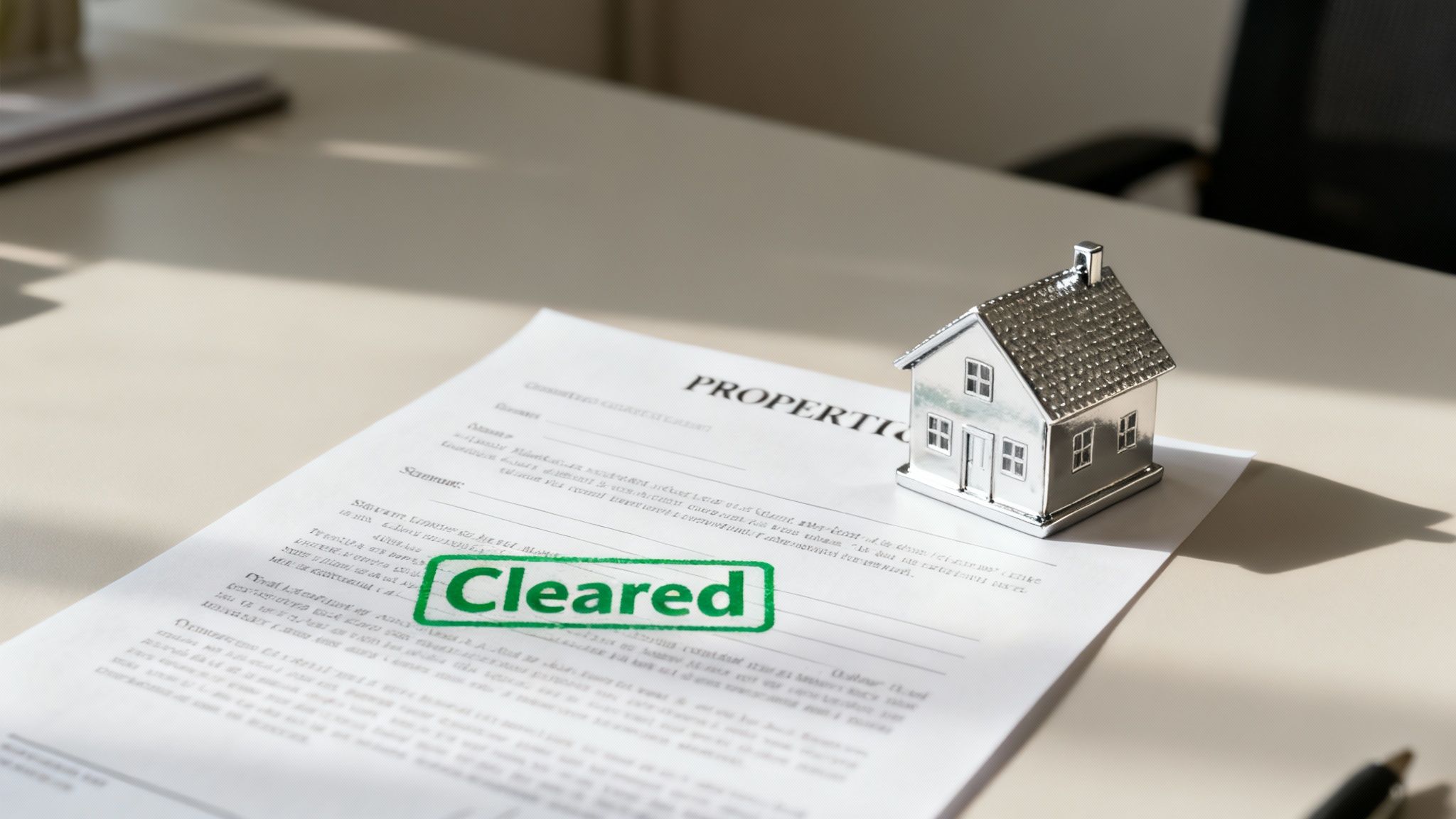
A release of mortgage is more than a final receipt; it’s the legal instrument that secures a home's value and the owner's freedom to leverage it. When this document is properly recorded, it officially clears the property's title, severing any lingering claims from the lender.
With a clear title, the homeowner is in control. They gain the undisputed freedom to sell their home, refinance for a better rate, or tap into their equity. A property's title is like its financial report card—a clean record opens doors to opportunity, while a single blemish can halt progress.
The Problem With a Clouded Title
What happens if a release document is lost, delayed, or recorded with an error? This creates a "cloud on title," a legal term for any issue that casts doubt on property ownership. This single discrepancy can trigger serious and immediate financial consequences for the homeowner and liability for the professionals involved.
A clouded title can derail a home sale instantly. Imagine a deal collapsing at the eleventh hour because of a paperwork mistake from a decade-old loan. It can also lead to a flat-out rejection of a refinance application, leaving the homeowner stuck with a higher interest rate.
A cloud on title is a locked gate on a property's financial potential. The value is there, but it's inaccessible until the title is cleared—a curative process that can spiral into expensive and time-consuming legal battles.
Securing Investments Proactively
The fallout from an unrecorded release is a significant liability. Verifying this final step is the only way to guarantee a client's most valuable asset is truly theirs. Unresolved second mortgages, often called "zombie mortgages," have been known to reappear years later, creating title nightmares that damage reputations and erode client trust.
This is where the meticulous work of real estate title searchers and abstractors becomes critical. For professionals in the field, understanding the importance of supporting abstractors with modern tools is key to preventing these costly headaches. Ultimately, a properly managed what is release of mortgage process ensures a property remains a secure asset, not a hidden liability.
A Professional's Step-by-Step Guide to the Release Process
Managing the final stages of a mortgage can be complex, but the release process itself follows a clear, predictable path. For title companies and lenders, understanding these stages is essential for maintaining efficient workflows and ensuring compliance. The journey from final payment to a clear title is a series of handoffs between the borrower, lender, and county recorder's office.
Let's walk through the four key stages of the mortgage release journey from an industry perspective.
Stage 1: Final Payoff and Confirmation
The process kicks off when the borrower makes their last mortgage payment. Typically, this follows a request for a final payoff statement from the lender—a document detailing the exact amount needed to close the loan, including any accrued interest.
Once the payment is processed, the lender issues a "paid-in-full" letter or similar confirmation. This serves as an initial receipt for the borrower, but it is not the official legal release. It is the internal trigger that initiates the legal documentation workflow.
Stage 2: Document Preparation and Execution
Now, the operational responsibility lies with the lender. Their team prepares a legal document, which may be called a Satisfaction of Mortgage or a Deed of Reconveyance, depending on state law. This is the official instrument stating the loan is satisfied and the lender relinquishes its lien on the property.
An authorized agent of the lending institution must sign this document before a notary. State regulations often mandate this step be completed within a specific timeframe—usually 30 to 90 days—to protect consumers from undue delays.
The accuracy of this document is paramount. A simple typo in a name, address, or property description can create a "cloud on title," a legal headache that can complicate future sales or refinancing efforts and expose the preparer to liability.
Stage 3: Official Recording
This is the step that makes the release legally binding. The lender, or its designated agent (like a title company), sends the signed and notarized release document to the official records office in the county where the property is located. This office may be called the County Recorder, Clerk of Court, or Register of Deeds.
The county clerk then officially files the document, making it a permanent part of the public record. This action formally removes the lien from the property's history, providing public notice that the debt is cleared. It is the single most important step in delivering a clear title. For more insights on real estate documentation and industry best practices, you can explore additional resources on our TitleTrackr blog.
Stage 4: Final Verification and Delivery
The process is nearly complete, but one crucial verification step remains. After allowing sufficient time for recording, it is best practice to obtain a copy of the recorded release from the county. The document should be inspected for the official stamp or marking from the clerk's office, showing the date and filing number. This provides ultimate proof of clear ownership to be delivered to the client and stored in the file.
Decoding Key Terms and Documents
The mortgage release process is filled with specific legal jargon. For industry professionals, mastering these terms is essential for communicating effectively with lenders, attorneys, and clients.
While the objective is always the same—freeing a property from a lender's claim—the official name for the release document can vary based on state laws and the original loan instrument.
Common Document Names
Professionals will frequently encounter one of these three documents:
- Satisfaction of Mortgage: The most common term, used in many states for the document declaring a mortgage loan is officially paid in full.
- Deed of Reconveyance: Used primarily in states that employ a Deed of Trust instead of a traditional mortgage. This document transfers the property title from a neutral third-party trustee back to the homeowner.
- Certificate of Discharge: Another name for the official document that formally discharges the mortgage lien from the property.
Regardless of the name, the function is identical: to clear the lien—the lender's legal claim—from the property's title. The final, critical action is county recording, where the document is filed with the local government to make the release a matter of public record.
This infographic breaks down the simple, three-stage flow of the mortgage release, from payoff to verification.
As you can see, the process starts with a financial transaction (your final payment) and ends with a legal one (recording and verifying the release).
For title and mortgage professionals, ensuring accuracy on these documents is non-negotiable. A simple clerical error—like a misspelled name or an incorrect property description—can create a "cloud on title." This defect can halt a future transaction and often requires costly curative action to resolve.
Common Roadblocks in the Release Process

Even with robust procedures, the path to a clear title can hit frustrating snags. The mortgage release process appears straightforward but is susceptible to human error and administrative bottlenecks that cause significant delays.
Simple clerical mistakes are often the culprits. A misspelled name, a typo in a property description, or a document lost between the lender and the county recorder's office can bring the workflow to a halt. Resolving these minor issues can take weeks or months, leaving a property's title in limbo and creating client frustration.
Navigating Lender Complications
One of the biggest operational headaches stems from changes at lending institutions. Banks merge, are acquired, or cease operations, creating a tangled web of responsibility that makes it difficult to identify the correct party to issue the release.
This is how a "zombie mortgage" is born—an old, paid-off loan that continues to haunt a property's title because the original lender is gone or unresponsive. Clearing these legacy liens often requires extensive legal work, costing significant time and money to resolve a preventable problem.
While most loans are paid off successfully, the status of every loan must be tracked. As of Q3 2025, U.S. foreclosure starts were up 23% year-over-year, a reminder that diligent loan status monitoring is critical. The full breakdown is available in the latest ICE mortgage performance report.
An unresolved lien is more than an inconvenience; it is a direct threat to a property's marketability and a potential source of liability. Proactive, automated monitoring is the only way to ensure a forgotten issue does not become a future crisis.
These are precisely the challenges that automated tracking systems are designed to solve. A platform like TitleTrackr monitors the entire release process, flagging delays and verifying each step is completed correctly. It provides the oversight needed to catch errors before they create title defects, ensuring every transaction closes with a clear, unencumbered title.
Got Questions About Your Mortgage Release?
As borrowers approach the end of their mortgage, questions inevitably arise. Providing clear, accurate answers is key to a smooth and professional closing experience.
Here are answers to some of the most common questions professionals encounter regarding the mortgage release process.
How Long Does This Whole Thing Take?
Patience is key, as the timeline depends on state laws and lender efficiency. Generally, the process takes 30 to 90 days from the final payment to the recorded release.
During this period, the lender prepares, executes, and submits the release document for recording. Many states have enacted statutes imposing firm deadlines on lenders, which helps protect consumers from unnecessary and frustrating delays.
What if My Original Lender Doesn't Exist Anymore?
This is a frequent challenge in the title industry. When banks are acquired or go out of business, the first step is to identify the "successor institution"—the entity that assumed the original lender's assets and obligations.
The Mortgage Electronic Registration Systems (MERS) database is an excellent starting point for this research. County public property records can also be examined for any recorded "assignments" of the mortgage that show the chain of title.
It's vital to educate clients on the difference between a paid-in-full letter and a recorded release. The letter is a simple confirmation of a zero balance. The Release of Mortgage is the official legal document that must be recorded to formally remove the lender's lien from the property title.
For more deep-dive answers, you can always check out our comprehensive TitleTrackr FAQ page. We cover a huge range of topics related to property titles and records.
What if I Find Out the Release Was Never Recorded?
Discovering an unreleased mortgage on a title search is a common issue. The first step is to contact the lender (or its successor) and demand they file the release immediately.
If they are unresponsive, a formal written demand is the next step. In a worst-case scenario, legal action may be necessary. A "quiet title" suit asks a court to intervene and issue a judgment officially clearing the lien, but this is a costly and time-consuming remedy for what is often a simple administrative failure.
Don't let manual errors and lender delays put your property title at risk. TitleTrackr uses AI-driven automation to monitor the entire process, ensuring every document is executed and recorded correctly and on time. See how our platform provides clarity and control over your title workflows.
Request a demo of TitleTrackr at https://titletrackr.com today.
 blog.titletrackr.com
Leave a comment