

Picture a traditional title search like trying to solve a complex puzzle in a dim, dusty library filled with unorganized books. It's tedious, slow, and all too easy to miss a critical piece. In a nutshell, title search software is the high-powered flashlight and digital assistant that brings this entire process into the modern age. It's a specialized platform designed to automate the grunt work of digging through public records, fundamentally transforming how professionals verify property ownership and accelerate closings.
What Is Title Search Software and Why Does It Matter?
At its core, title search software is a tool designed to find, organize, and make sense of property records automatically. It taps directly into countless public and private databases to pull everything—deeds, mortgages, liens, judgments—into one clean, manageable dashboard. But this isn't just about moving faster; it's about gaining clarity and confidence in every single transaction, allowing your firm to deliver a superior client experience.
For decades, the title industry has been built on painstaking manual labor. Abstractors and examiners would burn days, sometimes even weeks, driving to county courthouses or wrestling with clunky government websites. The process wasn't just a time-sink; it was a minefield of potential human error. One missed lien or a misinterpreted legal document could snowball into a massive, costly claim down the road.
This is exactly where a dedicated platform like TitleTrackr makes a world of difference.
From Manual Labor to Strategic Analysis
Instead of spending 80% of their time just gathering data, professionals can now shift their focus to high-level analysis and client service. The software does the heavy lifting, piecing together the intricate history of a property. It builds out a clear chain of title and automatically flags potential red flags that the human eye might otherwise skim right over.
This empowers title professionals to:
- Slash Turnaround Times: Run comprehensive searches in hours, not days, getting everyone to the closing table faster and increasing file throughput.
- Boost Accuracy: Drastically reduce the risk of human error by automating document retrieval and data extraction from verified sources.
- Lower Operational Costs: Cut back on the manual labor hours and administrative drag that come with old-school search methods.
By automating the routine tasks, title search software lets experts graduate from being data gatherers to becoming strategic advisors. You get to spend your time untangling complex title issues and delivering amazing service to clients, instead of just chasing down paperwork.
Ultimately, this technology is the foundation for a more efficient, secure, and reliable real estate market. It equips professionals with the tools they need to close deals faster, reduce liability, and deliver the kind of seamless experience modern clients expect. This guide will walk you through how this tech works and what to look for in a solution.
Key Features Your Title Search Software Must Have
Not all title search software is built the same. While plenty of platforms out there promise to make your life easier, the ones that actually move the needle are built with a handful of powerful, non-negotiable features. They’re designed to attack the biggest bottlenecks we all face in this industry.
To truly transform your workflow, you need a tool that goes beyond just pulling data and starts helping you analyze it. Think of it this way: a basic tool can dump a pile of books on your desk. A great tool reads them, organizes them, and hands you an actionable summary. That's a world of difference.
Let's break down the essential features that separate a simple database from a true workflow partner.
Automated Document and Data Retrieval
First up, the absolute must-have: automated document retrieval. This isn't just a fancy search bar. The software needs to plug directly and securely into county recorder offices, courthouses, and other public record databases. This completely cuts out the soul-crushing task of manually fetching documents, which saves a massive amount of time and slashes the risk of human error from the get-go.
This feature is the engine of the whole operation, constantly feeding your workflow with the most up-to-date documents as they become available. A solid platform will handle all the different data formats and sources without you having to constantly step in and manage it.
The infographic below gives you a bird's-eye view of how a modern title search flows, starting with this critical first step.
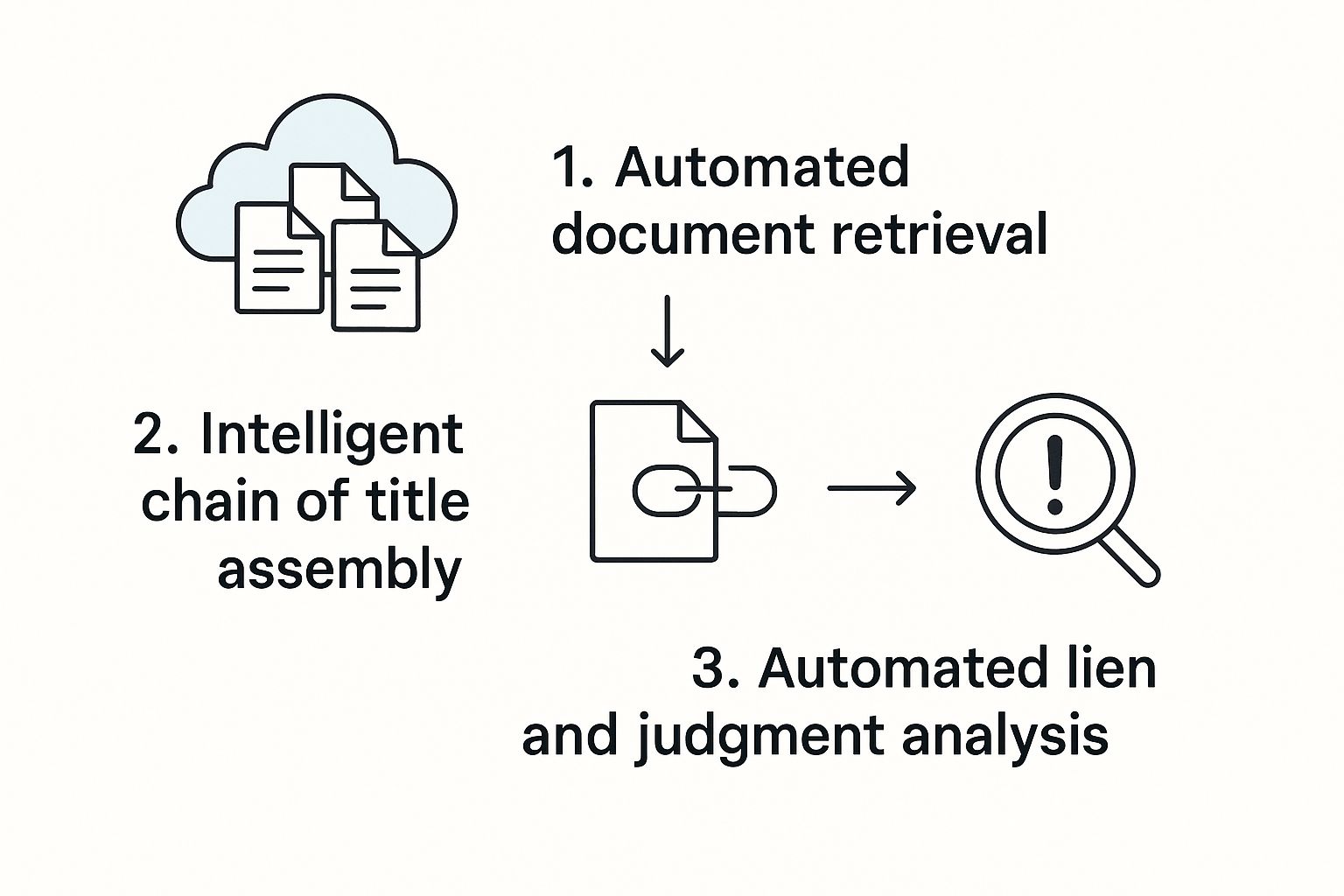
As you can see, each automated step builds on the last, creating an intelligent workflow that just makes sense.
Intelligent Chain of Title Assembly
Once all the documents are in, the next game-changing feature kicks in: intelligent chain of title assembly. The software shouldn't just give you a messy, disorganized list of deeds and mortgages. It needs to automatically and logically assemble them into a clean, chronological history of ownership.
This means the system is smart enough to identify grantors and grantees, understand different transaction types, and piece together the property's entire story. It’s like having a digital abstractor working for you around the clock. This is fundamental for getting a quick handle on a property's history without having to manually sift through decades of records.
A truly effective title search software doesn't just collect data; it creates context. It turns a chaotic pile of documents into a coherent narrative of ownership, which is where the real value lies for title professionals.
Proactive Lien and Judgment Analysis
Just as important is automated lien and judgment analysis. This is where the software stops being just a data collector and becomes a proactive risk manager. Using smart algorithms, the platform scans every single document it pulls for red flags that could derail a closing.
It's trained to spot issues like:
- Unreleased mortgages or deeds of trust
- Federal, state, or local tax liens
- Outstanding judgments against the owners
- Mechanic's liens and other unforeseen encumbrances
The system then flags these problems, sorts them by urgency, and presents them in a clear, actionable way. This lets examiners spend their time solving problems, not just looking for them.
Collaboration Tools and Customizable Reporting
Finally, any modern platform needs built-in collaboration tools and customizable reporting. Your team has to be able to work together inside one system—sharing notes, assigning tasks, and tracking progress without getting lost in endless email chains and spreadsheets.
On top of that, the software must be able to generate professional, easy-to-read reports that you can tailor for clients, underwriters, or attorneys. This makes sure all your hard work is presented in a simple, digestible format that shows off your firm's professionalism. When you're looking at solutions like TitleTrackr, make sure these foundational features are at the core of what they offer.
How AI Is Revolutionizing Title Search Accuracy
If you want to know what separates good title search software from a truly great platform, the answer is simple: Artificial Intelligence. Think of it as a super-powered assistant for the title professional, one that can tackle complex jobs once thought impossible to automate. This isn't about replacing human expertise; it's about amplifying it with incredible speed and precision.
It all starts with unlocking historical data. Traditional methods often hit a dead end with older, handwritten documents that are just too tough to decipher. But modern AI, armed with advanced Optical Character Recognition (OCR), can read and make sense of everything from centuries-old deeds to faded property cards, turning them into searchable digital text.

This single capability unlocks data that would otherwise take weeks of painstaking manual work to transcribe, instantly making it part of the searchable record.
From Text to Context
Reading the text is one thing, but understanding it is a whole different ballgame. This is where AI really shines. Using a technology called Natural Language Processing (NLP), the software interprets the complex legal jargon buried inside documents. It works like an expert paralegal that can read thousands of pages in mere seconds.
In practice, NLP takes over several key functions:
- Document Classification: It instantly identifies a document as a deed, mortgage, lien, or judgment, so you don't have to sort them manually.
- Data Extraction: The system intelligently pulls out the critical data points—think party names, legal descriptions, and recording dates.
- Relationship Mapping: Most importantly, it connects the dots between different documents, helping to build the chain of title far more accurately.
This intelligent processing means your team spends less time on the tedious grind of data entry and more time analyzing the complete picture of a property's history.
The real power of AI in title search software lies in its ability to move beyond simple data retrieval. It provides context, identifies patterns, and enhances the examiner's ability to spot issues that could threaten a clear title.
Predictive Analytics and Fraud Detection
Perhaps the most powerful application of AI is in predictive analytics. Even a seasoned examiner can miss subtle clues buried in mountains of paperwork. AI algorithms, on the other hand, are trained to spot anomalies and patterns that might point to potential fraud or hidden title defects.
For instance, the system might flag a series of rapid-fire quitclaim deeds or an unusual signature variation that could signal a forgery. This isn't just a "nice-to-have" feature; it's becoming essential. Studies have shown that AI can help businesses slash fraud investigation times by as much as 70%.
By proactively flagging these high-risk scenarios, AI-driven software like TitleTrackr gives you a much deeper, more accurate view of every property. It's about protecting both your firm and your clients from costly future claims.
Integrating Software Into Your Daily Workflow
Bringing new title search software into your firm isn't just about adding another icon to your desktop; it’s about completely reshaping how your team operates. This kind of technology moves your staff away from juggling a dozen different tasks and into a world where everything is managed from one central hub.
Imagine starting your morning not with a frantic scan of your inbox, but with a clean dashboard showing the live status of every single active search. This is your new command center. This is where the workflow begins.
When a new order lands, the process is dead simple. You input the property details once, and the software instantly gets to work, firing off requests to pull records from counties and state offices automatically. No more manual data entry or fetching the same document twice.
From Data Chaos to Organized Clarity
As documents start pouring in, the platform doesn't just dump them into a folder—it organizes them. The system intelligently starts piecing together the chain of title and flags any potential red flags for you, like a missing deed or a lien you weren't expecting. This transforms what was once a stressful, reactive fire drill into a controlled and predictable process.
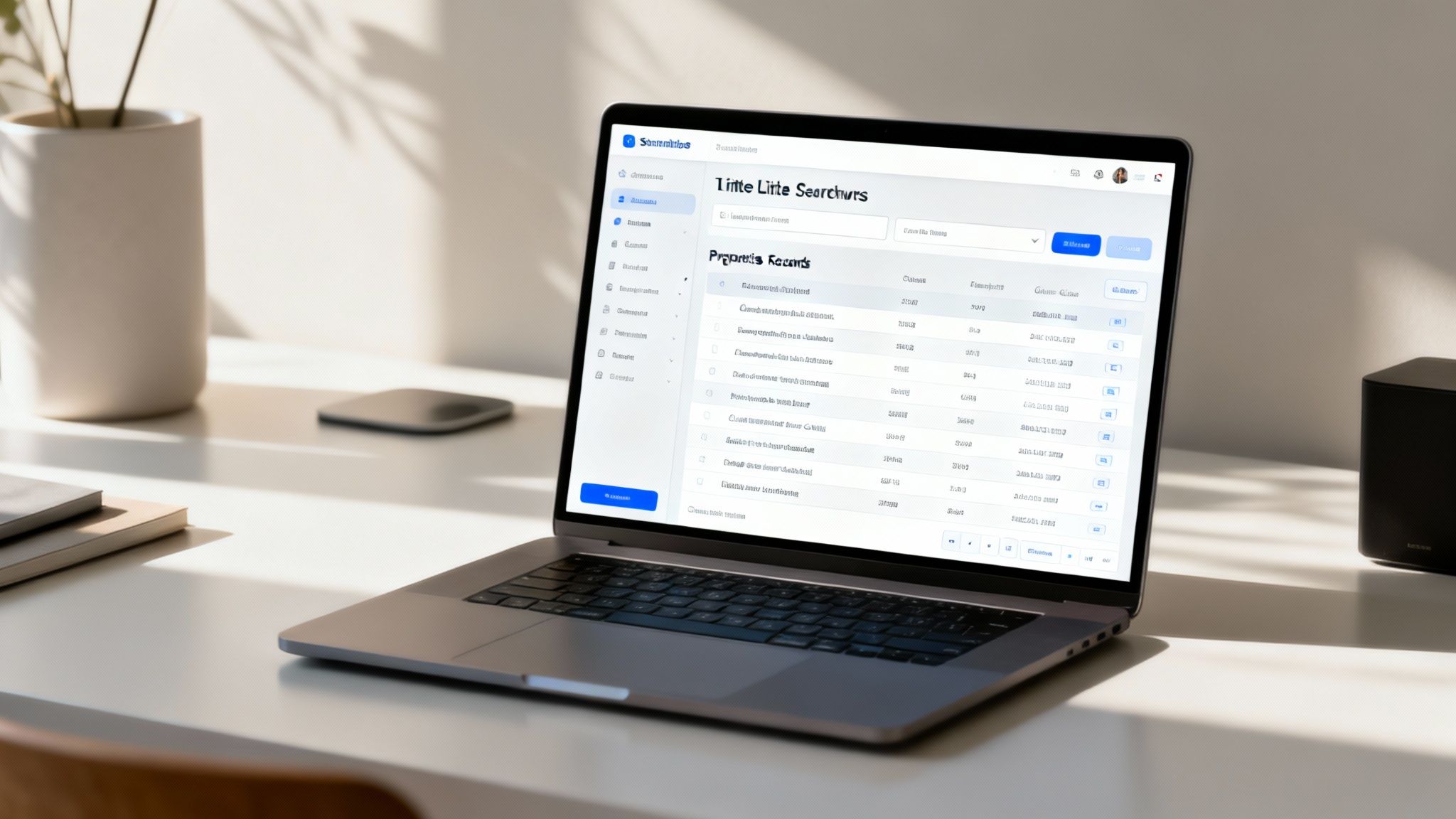
Here’s a glimpse of what a modern dashboard, like the one in TitleTrackr, looks like. It gives you an at-a-glance overview of every file and its progress.

This kind of centralized view immediately shows you what needs your attention, making sure nothing slips through the cracks and helping you slash your turnaround times.
This move toward digital workflows is fueling some serious industry growth. The global title production software market was valued at USD 543.4 million in 2023 and is on track to hit USD 1.45 billion by 2030. That’s a clear sign of just how fast firms are jumping on board with these powerful tools.
A Unified and Collaborative Environment
Inside this integrated system, collaboration just flows. Instead of digging through endless email chains and messy spreadsheets, your team can communicate right inside the platform.
- Share findings: Instantly send documents or notes over to underwriters for a quick review.
- Assign tasks: Hand off specific research tasks to team members with clear deadlines.
- Generate reports: Whip up a preliminary report or a final policy with just a few clicks.
A centralized platform tears down information silos, slashes the risk of costly clerical mistakes, and can shrink turnaround times from days down to a matter of hours. It's all about creating a smooth, efficient path from the initial order to the final policy.
This level of organization is a massive win for professionals buried in complex land records. By bringing every function into one place, abstractors can hit a new level of accuracy and efficiency. To see how TitleTrackr gives these experts a hand, check out our solutions for http://titletrackr.com/abstractors.
The end game? A workflow that lets you close more deals, faster, and with a whole lot more confidence.
How to Choose the Right Title Search Software
Choosing the right title search software is more than a simple purchase. It’s a foundational business decision that will define your firm's efficiency, accuracy, and growth for years to come. With so many options out there, it’s easy to get lost in feature lists and sales pitches.
But if you know what to look for, you can cut through the noise and find a partner that genuinely fits your workflow.
Let’s start with the absolute deal-breaker: data coverage. A platform is only as good as the records it can pull. Before you even look at a demo, you need to know if the software has direct, reliable access to the specific counties and states where you do business. Vetting a vendor's data depth isn't just a good idea—it's non-negotiable.
Next up is integration. Your title search software shouldn't be an island. It has to talk to your other systems, whether that's your closing platform, loan origination system (LOS), or other mission-critical tools. A seamless connection means no more manual data re-entry, which is a huge source of errors and wasted time. It’s all about creating a single, unified workflow.
Security and User Experience
In an industry built on trust, you can't afford to compromise on security and compliance. You’re handling incredibly sensitive client information, so your software has to meet the highest industry standards. Always confirm a vendor has rock-solid security protocols, like data encryption and regular compliance audits, to protect your firm and your clients from risk.
This isn’t just a title industry concern. The global enterprise search market, valued at USD 4.12 billion in 2023, is expected to hit USD 9.87 billion by 2032. That growth is all about the increasing demand for secure and effective data management. You can dig into the numbers in this market research report on enterprise search software.
Beyond security, the platform has to be something your team actually wants to use. A clunky, complicated interface will just slow everyone down and create frustration, completely defeating the purpose of your investment.
The best software feels like a natural extension of your team's expertise, not another hurdle they have to overcome. Look for a clean design, logical navigation, and responsive customer support that’s there when you need it.
Seeing the Software in Action
At the end of the day, you can't get a real feel for a platform from a feature list. The single best way to know if a solution is right for you is to see it in action with a live demo. This is your chance to bring your own real-world scenarios, ask tough questions, and make sure the software can handle your firm's unique challenges.
A good demo should let you evaluate:
- Real-World Speed: How quickly can the system actually pull records for a typical property in your core market?
- Workflow Logic: Does the process for building a chain of title make sense for how your examiners work?
- Support Quality: Can the vendor's team give you clear, straight answers to your technical and operational questions?
This step is what separates a long-term partner from just another product. To see if TitleTrackr is the right fit for your team, you can request a free trial and demo and experience its capabilities for yourself.
Common Questions About Title Search Software
Jumping into new technology always stirs up a few questions. That’s perfectly normal. And when the stakes are as high as they are in a real estate deal, it’s only natural to wonder about things like security, ease of use, and how a new tool fits into a process you’ve had nailed down for years.
Let's tackle those concerns head-on. Our goal is to pull back the curtain on how title search software actually works and give you the confidence to take that next step.
How Secure Is My Client Data in the Cloud?
This is, without a doubt, the first and most important question we hear from firms. And for good reason. You’re not just handing over data; you’re entrusting a partner with sensitive client information, and that requires absolute confidence.
Reputable cloud-based platforms are built from the ground up with security as the top priority. Think of it like a digital bank vault. While that old filing cabinet in the corner of your office is vulnerable, modern cloud platforms offer layers of protection far beyond what most individual firms can manage on their own.
These safeguards almost always include:
- End-to-End Encryption: This technology scrambles your data from the moment it leaves your computer until it arrives at the server, making it completely unreadable to anyone who might try to intercept it.
- Secure Data Centers: Your information isn't just floating around on the internet. It's stored in highly secure facilities with intense physical and digital protections, often meeting the same tough compliance standards as major banks.
- Regular Audits: Trust but verify. The best software vendors regularly bring in third-party security experts to audit their systems and prove they meet industry standards, like SOC 2 compliance.
What Is the Learning Curve for My Team?
Moving from a familiar manual process to a new digital platform can feel like a huge leap. The fear that a steep learning curve will grind your team’s productivity to a halt is completely valid.
But here’s the thing: modern title search software is designed with real users in mind. The best platforms focus on an intuitive interface that actually mirrors the logical steps of a traditional title search.
The goal of good software isn't to force you to learn a new job; it's to make your existing job easier. A clean dashboard, logical navigation, and clear labeling ensure that even less tech-savvy team members can get up to speed quickly.
A great software partner won’t just hand you the keys and wish you luck, either. They’ll be right there with you, offering comprehensive training, clear documentation, and real, human support to guide your team through the transition. That partnership is what turns a good tool into a great investment.
Will This Software Integrate With Our Other Tools?
No tool is an island. Your firm probably relies on a whole suite of software for closings, accounting, or managing client relationships. The last thing you want is another siloed system that doesn't talk to anything else.
This is where integration capabilities become a make-or-break feature.
Top-tier software is built to connect seamlessly with other systems using APIs (Application Programming Interfaces). This is the tech that allows information to flow automatically between your tools, killing off redundant data entry and drastically cutting the risk of simple clerical errors. When your tools can communicate, you create a genuinely unified workflow from start to finish.
For a deeper dive into these and other topics, you can explore more details on our frequently asked questions page.
Ready to see how an AI-driven platform can address your firm's unique challenges and dramatically boost efficiency? Schedule a personalized demo with TitleTrackr today and discover the future of title searches. https://titletrackr.com
 blog.titletrackr.com
Leave a comment