

For years, real estate has run on paperwork, handshakes, and a whole lot of manual effort. Digital transformation is the industry-wide shift away from those slow, paper-based systems toward a connected, tech-driven way of doing business. It’s not just about getting a few new apps; it’s about rebuilding the very foundation of how you operate to make every transaction faster, more transparent, and completely focused on the client. The goal is to move from fragmented data and manual processes to a single source of truth that drives efficiency and growth.
A New Blueprint for the Modern Real Estate Pro
Think of it like this: building a traditional house requires separate, disconnected blueprints for plumbing, electrical, and the structure itself. But a modern smart home is designed from the ground up with a single, integrated digital foundation where every system talks to each other. The result is seamless efficiency for the homeowner.
That’s exactly what digital transformation in real estate is all about. It’s a move beyond clunky, isolated tools toward a connected ecosystem that rewires everything from how you find and market properties to how you handle the final closing. By creating a single source of truth that everyone involved can access, you cut out the endless data re-entry and costly human errors that have plagued the industry for decades.
Why This Isn't Just a Trend—It's a Competitive Edge
Making this change isn't about chasing the next shiny object. It’s about securing a real competitive advantage in a market that's already moving. The numbers don't lie: today, about 58% of real estate companies have a documented digital strategy, and 41% are actively overhauling their processes with technology.
This isn't happening in a vacuum. It’s being driven by what clients want. An overwhelming 95% of U.S. home buyers now use online resources during their property search. You can read more about the rise of digital real estate strategies and how they're reshaping the market.
This evolution brings real, tangible results for your business.
- For Agents and Brokers: It automates the tedious administrative work, freeing you up to focus on what actually moves the needle—building client relationships and closing deals.
- For Investors: It delivers data-backed insights for making smarter, faster decisions. You can spot market trends and investment opportunities that were completely invisible before.
- For Clients: It creates the smooth, on-demand experience they’ve come to expect in every other part of their lives, from virtual tours to digital closings. That's how you build trust and earn loyalty.
To see how these moving parts fit together, just look at how digital tools are changing the core activities of the job.
How Digital Tools Are Upgrading Real Estate
| Activity | Traditional Method | Digital Method |
|---|---|---|
| Property Discovery | Driving neighborhoods, print ads, word-of-mouth | AI-powered search on platforms like Zillow, personalized alerts |
| Marketing | Flyers, newspaper ads, physical open houses | Social media campaigns, 3D virtual tours, targeted digital ads |
| Client Communication | Phone calls, in-person meetings, mail | Instant messaging, automated email updates, video calls |
| Document Management | Filing cabinets, couriers, fax machines | Cloud storage (Dropbox), e-signature platforms (DocuSign) |
| Closing Process | In-person signing meetings, paper checks | Remote online notarization (RON), digital payments |
This table really just scratches the surface, but it shows the clear path from "the old way" to a more efficient, modern workflow.
The infographic below really drives home how these new technologies connect all the key players to get better results.
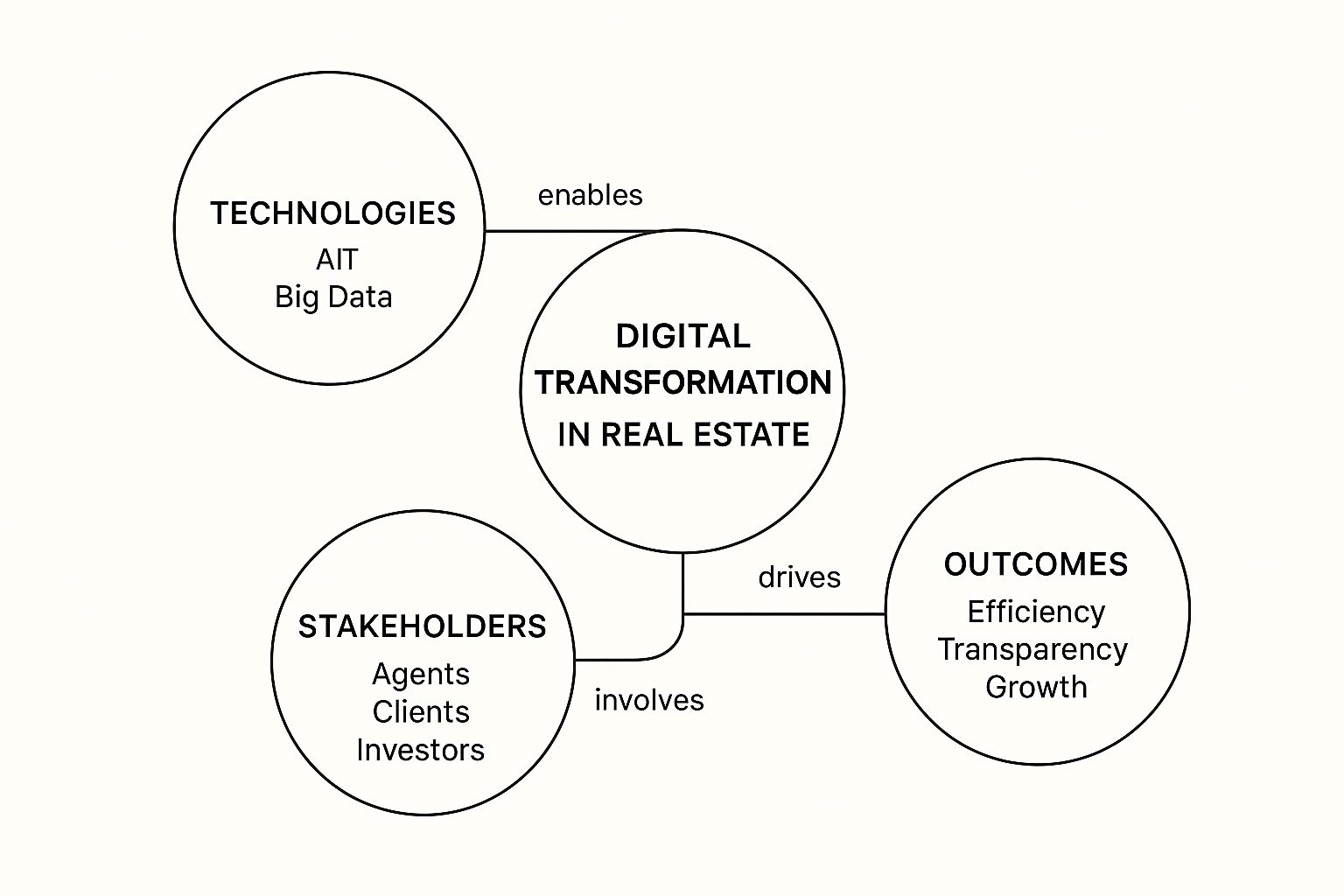
As you can see, there's a straight line from adopting technologies like AI and Big Data to hitting key business goals like better efficiency and real growth. At the end of the day, a smart digital strategy isn't about adding complexity—it's about gaining clarity and control over your business.
Core Technologies Powering the Industry Shift

The massive shift happening in real estate isn't magic; it's being driven by a powerful suite of technologies that are completely changing how business gets done. These aren't just abstract concepts anymore. They are practical, on-the-ground tools delivering real results for professionals who are paying attention.
Leading the charge are artificial intelligence (AI) and big data, which work together almost like a crystal ball for the property market. They allow firms to stop guessing and start making data-driven predictions.
This combination is a cornerstone of the digital transformation in real estate. With the global market for big data analytics expected to rocket past $68 billion by 2025, it’s clear how valuable this has become. Real estate firms are now feeding huge datasets—from local traffic patterns to demographic shifts—into machine learning models. This gives them a much clearer picture of investment risks and potential returns before a single dollar is spent.
AI and Big Data: The Predictive Powerhouse
Imagine being able to forecast a neighborhood's appreciation rate with genuine accuracy or pinpointing the perfect moment to list a property for the highest possible profit. That's exactly what AI and big data bring to the table. By analyzing historical sales, current market conditions, and even social media trends, these systems can spot patterns the human eye would completely miss.
This technology translates directly into smarter business strategies.
- For Investors: Predictive analytics can flag undervalued properties or up-and-coming hotspots long before they go mainstream, creating incredible investment opportunities.
- For Brokers: AI can help set the perfect listing price by analyzing comps with far more detail than a standard market analysis, leading to faster, more profitable sales.
- For Agents: Machine learning can analyze a client’s online habits to suggest properties that are a perfect match, improving the customer experience and saving everyone a ton of time.
By turning raw information into actionable intelligence, AI and big data empower real estate professionals to make confident, strategic decisions that were once based purely on intuition and experience.
Blockchain and Tokenization: Creating Trust and Access
While AI helps predict the future, blockchain technology is all about securing the present. Think of blockchain as a super-secure digital ledger that is virtually impossible to tamper with. Every transaction is recorded in a "block" and added to a permanent, transparent chain, creating an unchangeable record of ownership.
This is a game-changer for an industry that has long battled fraud and clunky title management processes. Smart contracts, which are self-executing contracts built on the blockchain, can automate things like escrow and title transfers, drastically reducing the need for middlemen. This doesn’t just speed up closings; it cuts down on human error—a major source of delays and legal nightmares. Of course, well-managed data is crucial, which is where specialized experts come in. You can learn more about the professionals who handle title data in our guide on what abstractors do.
On top of that, blockchain opens the door to tokenization—a process that converts ownership rights of a physical asset into digital tokens. Suddenly, a $10 million commercial building can be divided into thousands of digital shares. This simple innovation makes high-value real estate accessible to a much wider pool of investors, pumping fresh liquidity into the market.
IoT, VR, and AR: Building Smarter, More Immersive Experiences
Finally, a trio of technologies is completely reshaping the physical experience of property. The Internet of Things (IoT), Virtual Reality (VR), and Augmented Reality (AR) are closing the gap between the digital and physical worlds.
- Internet of Things (IoT): These are the smart devices embedded within buildings, from thermostats that learn your schedule to security systems you can manage from your phone. For property managers, IoT provides real-time data on building performance, allowing for predictive maintenance that saves money and prevents expensive breakdowns.
- Virtual Reality (VR): VR creates fully immersive 3D walkthroughs of properties. A potential buyer on another continent can "walk" through a home as if they were actually there, saving agents and clients countless hours on physical tours with unqualified leads.
- Augmented Reality (AR): AR lays digital information over the real world. A client can point their phone at an empty room and see it virtually staged with different furniture, or an investor can see key data about a building just by looking at it through their device.
Together, these core technologies are the engine driving the digital transformation in real estate. They aren't just making old processes a little better; they're creating entirely new ways to invest in, manage, and experience property.
Transforming Property Transactions with Technology

Let's be honest, the final stage of any property deal—the closing—is where things often get messy. It's a world of paperwork mountains, endless phone tag, and that nagging feeling that one small mistake could derail the whole thing. This is exactly where digital transformation in real estate is making its biggest impact.
Technology is stepping in to pull apart these old, clunky processes. It’s replacing them with systems that are faster, safer, and far more transparent. These tools aren't just a minor speed boost; they are completely changing how property changes hands, making the experience better for everyone involved.
Automating Trust with Smart Contracts
At the center of this shift is blockchain technology, which you can think of as a secure, unchangeable digital ledger. Built on top of that are smart contracts, which are basically self-executing agreements with the terms coded directly into them.
Think of a smart contract like a high-tech vending machine for real estate. Once certain conditions are met—say, a clean inspection report is uploaded or the title search comes back clear—the contract automatically performs the next step, like releasing funds from escrow. No need for manual checks, and it dramatically cuts down the risk of human error or holdups.
The effect of this is huge. It cleans up critical parts of the process like:
- Escrow Management: Funds are held and released automatically based on verified triggers, removing the need for manual oversight.
- Title Transfers: Ownership records get updated on the blockchain with cryptographic certainty, which seriously cuts down on title fraud risk.
- Contingency Fulfillment: The code itself monitors and enforces deadlines and conditions, keeping everything on track.
By automating these steps, smart contracts can shrink closing timelines from weeks down to days—sometimes even hours—all while adding a level of security that paper-based systems could only dream of.
Making High-Value Assets Accessible Through Tokenization
Beyond just securing the transaction itself, blockchain is also opening up real estate investment to more people through something called asset tokenization. This process converts the ownership rights of a physical property into digital tokens that can be bought, sold, and traded online.
Imagine a $5 million commercial building. Instead of needing one buyer with incredibly deep pockets, tokenization could split that property into 5,000 digital shares worth $1,000 each. This simple but brilliant idea shatters the huge financial barriers to entry, letting a much wider group of people invest in high-value, income-generating properties.
Asset tokenization transforms illiquid, high-value properties into divisible, tradable digital assets. This unlocks new capital, increases market liquidity, and gives smaller investors a chance to build wealth through fractional ownership.
This model doesn't just help new investors. It also gives property owners a new, more efficient way to raise capital without having to rely entirely on old-school financing.
The New Standard for Secure and Swift Closings
When these technologies come together, they create a closing experience that actually feels like it belongs in the 21st century. Platforms like RealT and Propy are already building global marketplaces where you can buy and sell tokenized real estate. At the same time, smart contracts handle the title transfers and escrow automatically. This chops transaction times from weeks down to mere hours and makes the whole process crystal clear. You can read more about how technology is disrupting the real estate market to see the bigger picture.
The result is a much cleaner process that lowers risk and gets rid of expensive delays for everyone. For agents and brokers, it means happier clients and getting paid faster. For buyers and sellers, it means the peace of mind that comes from a secure and open transaction. This is quickly becoming the new standard for anyone who wants to stay competitive.
The Tangible Benefits of Going Digital

Let's move past the theory. The real test of any digital transformation in real estate is the concrete value it delivers. Adopting a digital-first approach isn't about chasing the latest tech trend; it's about making a direct, positive impact on your efficiency, your decision-making, and, ultimately, your bottom line.
The advantages are clear and measurable, affecting everything you do day-to-day. From automating the tedious tasks that drain your energy to delighting clients with an experience they’ll remember, the return on this shift is undeniable. It makes a powerful business case for any professional serious about securing a stronger position in the market.
Boosting Operational Efficiency Through Automation
One of the first things you'll notice is a huge jump in operational efficiency. Real estate has always been bogged down by administrative work—endless paperwork, manual data entry, and repetitive follow-ups that eat up precious hours. Think of automation as a force multiplier for you and your team.
By digitizing these workflows, you get that time back. Suddenly, your team can stop chasing signatures and start focusing on high-value activities that actually generate revenue, like building client relationships and closing more deals. It’s the most direct path to a more productive and profitable operation.
The promise of automation is simple: it lets your most skilled people do the work that actually requires their expertise. The technology handles the rest with speed and precision.
Empowering Smarter Decisions with Data Analytics
In a market often driven by gut feelings and speculation, data is your secret weapon. Digital platforms are constantly collecting mountains of information on property performance, market trends, and client behavior. Data analytics tools are what turn all that raw information into actionable insights.
This is how you move from guessing to knowing. Instead of relying only on intuition, you can make confident, evidence-based decisions that minimize risk and maximize returns.
- For Investment: Analyze demographic shifts, rental yield trends, and neighborhood growth to spot undervalued assets with serious potential.
- For Marketing: Use client data to build targeted campaigns that reach the right buyers with the right message, massively improving your ROI.
- For Operations: Track performance metrics to find the bottlenecks in your sales funnel and make specific improvements to speed up your deal flow.
For those looking to build their own custom data solutions, it's helpful to understand the technical side. To integrate new data capabilities smoothly, check out our resources for developers at TitleTrackr to see how our API can connect with your existing systems.
Creating an Unforgettable Customer Journey
This might be the most crucial benefit of all: the ability to create a superior customer experience. Today’s clients expect the same convenience and transparency from their real estate agent that they get everywhere else. A clunky, paper-based process just doesn’t fly anymore.
Digital tools can transform the client journey from a source of stress into a smooth, positive experience. In a competitive industry, this is how you build trust and earn loyalty that lasts.
Think about these key touchpoints:
- AI-Powered Recommendations: Smart systems analyze a client's preferences and browsing history to suggest properties they'll actually love, saving everyone a ton of time.
- Immersive Virtual Tours: High-quality 3D tours let buyers explore properties from anywhere in the world. This ensures that physical showings are reserved for only the most qualified, serious leads.
- Seamless Online Closings: Digital transaction platforms and remote online notarization (RON) make the final step of the deal fast, secure, and incredibly convenient.
Ultimately, the digital transformation in real estate gives you a clear path to working smarter, not harder. It leads to major cost savings, a stronger market position, and a client experience that turns one-time deals into lifelong relationships.
Building Your Digital Transformation Roadmap
Knowing what digital transformation in real estate means is one thing. Actually doing it is a completely different ballgame. The good news? You don’t have to burn down your entire operation and start from scratch. A smart transformation is built on a practical, step-by-step plan—a roadmap that starts with small, strategic wins and builds momentum from there.
This isn’t about buying every flashy new gadget. It’s about creating a plan that solves your most immediate problems first and lines up perfectly with your agency's goals. The whole journey starts not with a huge check, but with an honest look in the mirror at how you’re doing things right now.
Start With a Clear-Eyed Audit
Before you can build the future, you have to get real about the present. The first step is a no-nonsense audit of your current operations to find the biggest headaches and the best opportunities for a quick upgrade. This is where you pinpoint the friction that’s slowing down your team and annoying your clients.
Get your team together and ask some direct questions:
- Where is our time vanishing? Is it buried in paperwork, spent manually punching data into three different systems, or lost in the endless back-and-forth of scheduling closings?
- What tasks are mind-numbingly repetitive and begging for mistakes? Look for anything that involves copying and pasting or needs constant double-checking.
- Where do our communications fall apart? Find the gaps between agents, clients, and partners that cause delays and frustration.
- What part of our client experience feels like it's from another decade? Is it the property search, the document signing, or the transaction itself?
Your answers will create a “pain point map,” showing you exactly where a little bit of tech can make a big, immediate difference.
Focus on High-Impact First Steps
Once you have your map, fight the urge to fix everything at once. The secret to building momentum is to start with one small project that delivers a quick, obvious win. This proves the value of new tools to your team and gets everyone on board for the bigger changes to come.
For most agencies, a perfect starting point is one of the most critical—and historically inefficient—parts of any deal: title and closing management. This process is often a black box for clients and a huge administrative weight for agents, making it the perfect candidate for a digital facelift.
Choosing the right first project is everything. Target a single area where technology can deliver an immediate boost in efficiency, cut down on errors, and make a noticeable improvement for the client. That first success story becomes the launchpad for your entire digital strategy.
This is exactly where a specialized platform can change the game. Instead of trying a massive, all-at-once overhaul, you can bring in a focused solution that modernizes a single, crucial workflow. This approach keeps risk low and delivers immediate returns.
An Ideal First Step: Modernizing Title Management
For so many people in this business, the title search and abstracting process is the definition of a bottleneck. It’s a swamp of manual, document-heavy work that’s just asking for errors and delays, which directly impacts your closing times and client happiness. That makes it an ideal target for your first digital move.
This is where a solution like TitleTrackr comes into play. It’s designed to be a powerful first step on your digital journey by attacking this specific pain point. By using AI to automatically pull and analyze data from legal documents, it turns what used to be a week of manual drudgery into a task that takes seconds.
Bringing in a tool like TitleTrackr provides several instant benefits that prove the power of digital transformation:
- Drastic Efficiency Gains: It automates the painful process of reading through old deeds and records. This frees up your team to focus on solving tricky title problems instead of just typing data.
- Improved Accuracy: AI-driven analysis slashes the risk of human error. The result is cleaner title reports and far fewer last-minute surprises at the closing table.
- A Superior Client Experience: Faster, more accurate title work means quicker closings and more transparency for your clients, directly improving how they feel about your service.
By starting with a focused, high-impact area like title management, you aren't just buying new software. You're building a rock-solid business case for a broader digital transformation in real estate. This first win makes it much easier to get your team excited and justify more investment in technology, paving the way for a truly modern, efficient, and client-focused business.
Ready to see how it works? Request a demo of TitleTrackr to see how you can start your journey today.
Common Questions About Real Estate Tech
Jumping into new technology always sparks a few questions. The whole idea of a digital transformation in real estate can sound massive and overwhelming, but when you break it down, it’s really just a series of practical, forward-thinking steps. This section gets right to the point, tackling the most common concerns we hear from real estate professionals every day.
Making a change starts with getting clear on the details. Let's clear up some of the biggest questions on your mind.
Where Should My Agency Start Its Digital Transformation?
The best way to start is to go after your single biggest headache. Don't try to change everything all at once. For a lot of agencies, the most frustrating, time-sucking part of any deal is the slow, manual grind of managing titles and transactions.
When you focus on one high-impact area, you get an immediate win. Bringing in a specialized platform digitizes that entire workflow, which means fewer errors, faster closings, and happier clients right out of the gate. That early success gives you the confidence and momentum to tackle bigger digital projects down the road.
Is This Affordable for a Small Brokerage?
Absolutely. You don't need a massive tech budget to get started. Many of the most effective tools today are offered as scalable, subscription-based services (SaaS), making them accessible for businesses of any size.
The trick is to zero in on tools that solve your most urgent problems and offer a clear return on your investment. This could be a modern CRM that keeps you organized or a dedicated platform for transaction coordination. The time you save and the efficiency you gain often pay for the software itself, letting you reinvest those savings into new tools as you grow.
"The future of real estate is no longer about delivering four walls to tenants. Instead, it's about creating a unique, personalized customer experience that fosters meaningful interactions, collaboration, and productivity." – Scott Rechler, CEO of RXR Realty
This quote nails it. The goal isn't just about adding tech for tech's sake; it's about using it to create a better, more human experience for your clients—and that's something any business can achieve.
Will Technology Eventually Replace Real Estate Agents?
This is a big fear, but the reality is that technology isn't replacing agents—it's empowering them. By automating the tedious, administrative stuff like paperwork, scheduling, and data entry, digital tools free you up to focus on what people do best.
This shift lets you pour more time and energy into the irreplaceable parts of your job:
- Building real relationships with clients that are based on trust and a genuine connection.
- Giving expert local advice and market insights that an algorithm could never match.
- Negotiating complex deals with skill, nuance, and a bit of creativity.
The most successful agents won't be the ones replaced by technology. They'll be the ones who master it to provide a level of service and expertise that AI simply can't touch. For a deeper look at other common concerns, you can find more answers in our detailed FAQ section on real estate technology.
The journey to a more digital operation is a series of smart, strategic steps, not a giant leap. By tackling your biggest pain points first with targeted, effective solutions, you can build a stronger, more competitive business one piece at a time. The right tools don't add complexity; they create clarity and control.
Ready to take the first, most impactful step in your digital journey? See how TitleTrackr can automate your title search process, eliminate errors, and accelerate your closings.
 blog.titletrackr.com
Leave a comment