

In real estate, what is color of title? It’s a term that describes a claim to a property that looks perfectly legitimate on the surface but is hiding a critical, underlying flaw. The claim comes from a written document, like a deed or a will, that gives the appearance of ownership, even when the legal standing is shaky at best.
Understanding Color of Title in Plain English
Think of it this way: you have a key that looks like it was made for a house you believe you own. It slides into the lock, fits perfectly, but for some reason you can’t see, it just won't turn. That’s a great way to understand color of title.
You have a document that seems to give you ownership, but it's got a major defect. You might be acting like the real owner—paying the property taxes, keeping the lawn mowed, and living there in good faith—but your claim to the property isn't legally sound.
The Appearance of Ownership
The heart of the concept is the "color" or the illusion of a valid claim. This isn't just someone making a random claim to a property; it's rooted in paperwork that, to most people, looks completely official. The person holding it genuinely believes they are the rightful owner.
The critical distinction is that 'color of title' is not the same as a clear, marketable title. While it looks right, the underlying defect prevents it from being legally whole, creating potential clouds over ownership down the road.
To truly get it, you have to recognize the gap between what a document looks like and its actual legal power. For instance, if a deed required signatures from two sellers but only one signed, that creates this exact problem. The document is real, but it’s defective.
Clear Title vs Color of Title at a Glance
To make the distinction even sharper, let's break down the core differences between a truly "clear" title and one that just has the "color" of title.
| Attribute | Clear Title (Marketable Title) | Color of Title |
|---|---|---|
| Legal Standing | Legally sound and free from defects or clouds. | Appears valid but has a significant legal defect. |
| Document Basis | Based on valid, properly executed, and recorded documents. | Based on a flawed document (e.g., improper signature, forgery). |
| Ownership | Provides true, undisputed legal ownership. | Provides only the appearance of ownership. |
| Transferability | Can be freely and legally sold or transferred. | Cannot be legally transferred without first curing the defect. |
Ultimately, a clear title gives you undisputed legal ownership, while color of title offers only a convincing illusion that can unravel under legal scrutiny.
The image below breaks down some of the attributes that influence how a document's clarity and validity are perceived, which is a great parallel to our discussion.
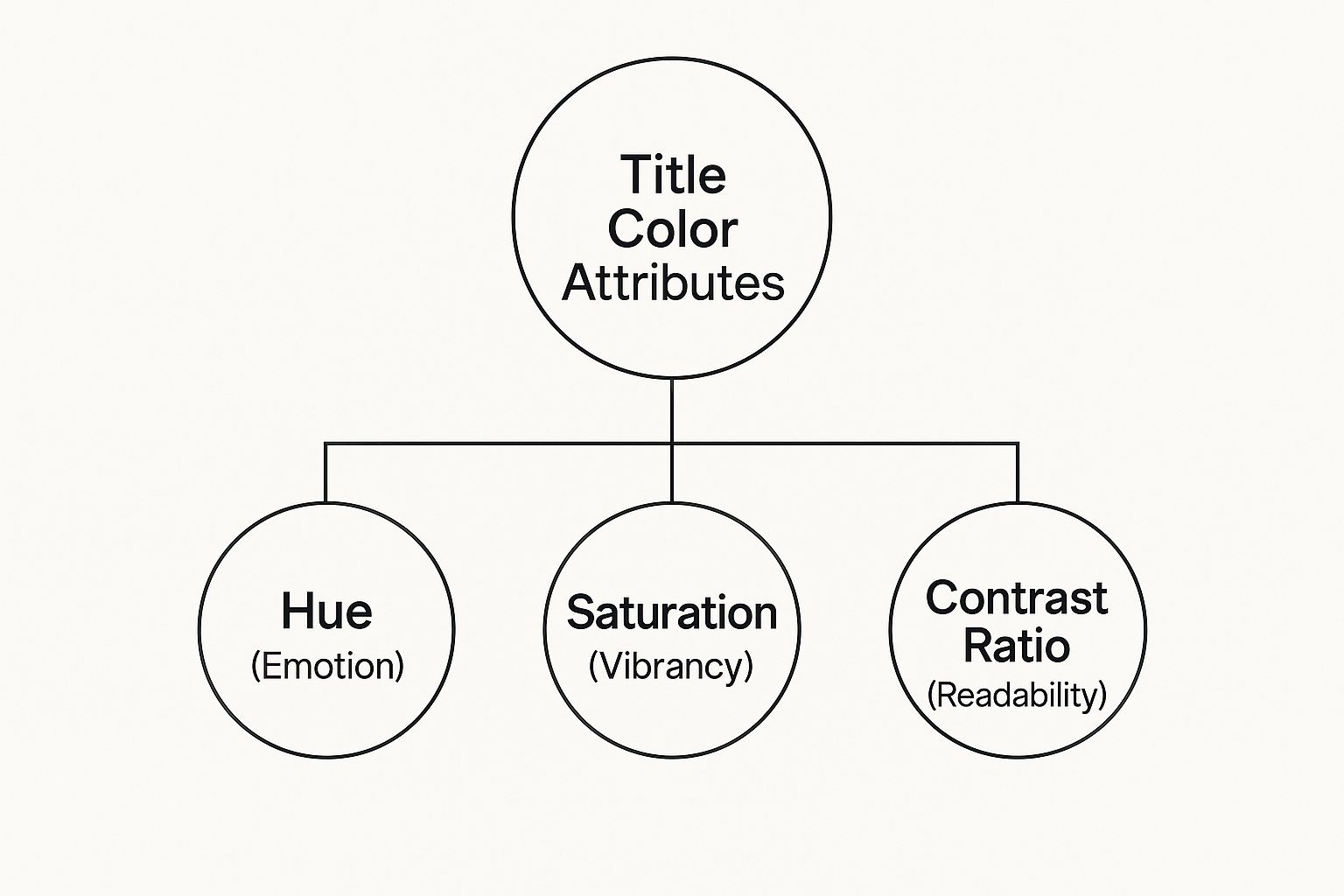
Just as things like vibrancy and readability affect how we perceive visual information, a flawed legal document can create a misleading perception of ownership. That perception gap is where major legal headaches begin.
The Paper Trail That Creates Color of Title
The idea of what is color of title isn’t some abstract legal theory. It’s born from a very real, tangible paper trail—official-looking documents that are, at their core, fundamentally flawed. A claim to a property gets its "color" of legitimacy from these written instruments, which create a believable—but ultimately defective—path to ownership.
This isn't a situation that comes from a handshake deal or a verbal promise. It happens when a document appears to transfer the property correctly, but a hidden error completely guts its legal authority. Think of a last will and testament that gifts a piece of land to an heir. The will is a real document, but it’s trying to give away something the deceased person never actually owned in the first place.
Common Sources of Defective Title Documents
Several all-too-common scenarios can create this deceptive appearance of ownership. Each one involves a document that looks perfectly valid on the surface but is hiding a critical flaw that clouds the title.
- Improperly Executed Deeds: Maybe a deed is missing a necessary signature from a co-owner or spouse. For example, if two siblings jointly own a property but only one signs the deed to sell it, the buyer gets a document that looks official but is legally incomplete.
- Forged Documents: It’s as simple as it sounds. A deed or other transfer document could be forged entirely. The signature might look convincing, but if it isn’t real, the entire transfer is invalid right from the start.
- Clerical or Recording Errors: Sometimes, the problem is simple human error. A county clerk might accidentally record the deed against the wrong property parcel, creating a paper trail that points to a completely incorrect owner.
These seemingly minor mistakes can have massive consequences. A single flawed document in a property's history can create decades of ownership uncertainty, impacting sales, financing, and inheritances.
Understanding where these issues come from is the first step in spotting potential risks in a property's chain of title. The meticulous work performed by title professionals is what brings these hidden defects to light. For those in the industry, learning about the tools available to modern title abstractors can give you a major edge in identifying these problems with far greater speed and accuracy.
How Color of Title Powers Adverse Possession Claims
This is where the idea of "color of title" really gets its legal muscle. A flawed deed on its own is just a clerical nightmare. But pair it with a legal concept called adverse possession, and it can become a surprisingly effective way to claim ownership of a property.
Adverse possession, sometimes called 'squatter's rights', is the legal principle that allows someone who openly occupies and uses a property for a certain number of years to actually gain legal ownership, even if they aren't the true owner on paper. Having color of title makes that claim exponentially stronger.
Think of it like adding fuel to a fire. Simply occupying the land for years is the spark. But having a document that looks like a real deed—the color of title—is the fuel that turns a flicker of a claim into a bonfire in the eyes of the court. It demonstrates that the occupier wasn't just a trespasser; they had a legitimate, good-faith reason to believe the property was theirs all along.
The Legal Edge in an Adverse Possession Case
That defective document isn't just a minor detail; it completely changes the game for an adverse possession claim, often tipping the scales heavily in favor of the person occupying the land. The advantages are real and significant.
- A Shorter Clock: Many states dramatically reduce the number of years someone has to occupy a property to make a claim if they have color of title. For instance, a state might normally require 20 years of occupation, but that could drop to just 7-10 years if the person holds a flawed deed.
- Claiming the Whole Lot: Without color of title, an adverse possession claim might only cover the land someone physically used—say, a house and the small garden around it. But with a defective deed, the claim can extend to the entire property described in that document, even the acres the occupier never actually set foot on. This is called constructive possession.
- Proving Good Faith: The document itself is powerful proof. It shows the occupier’s possession was based on an honest, even if mistaken, belief that they were the rightful owner, which is a core requirement for these claims in most places.
In short, color of title elevates an adverse possession claim from a simple act of squatting into a legally grounded argument for ownership. The flawed document becomes the bedrock of the claimant's belief that they are the true owner.
When you combine this faulty document with years of open, continuous use and a consistent record of paying property taxes, you get a very compelling case. This is a critical area of expertise for landmen and energy developers, who have to meticulously verify every link in a chain of title to stop these exact kinds of claims from derailing a project. A court can, and often will, step in to legally transfer ownership, turning a defective claim into a clear, marketable title.
Finding and Fixing Hidden Title Defects
Discovering a "cloud" on a property title can sound intimidating, but a defect that creates what is color of title is usually something that can be fixed. The key is to find and resolve these issues before they can derail a sale or financing, protecting the investment for the long haul. The whole process really boils down to two main steps: first, you uncover the problem, and then you apply the right legal fix.

It always, always starts with a thorough title search. This isn't just a quick check; it's a deep dive into the public records to map out the entire history of a property and flag anything that doesn't look right. This is exactly how you find those forgotten liens, old boundary disputes, or simple clerical errors on a deed from decades ago.
Proven Methods for Clearing a Clouded Title
Once a defect is out in the open, there are several solid strategies for clearing that cloud and making the title marketable again. The right path forward depends entirely on the specific problem the search turned up.
- Comprehensive Title Search: Think of this as the essential diagnostic step. Before you can even think about a solution, you have to understand the full scope of the problem by tracing the property’s ownership history from start to finish.
- Title Insurance: Now, this won't fix a problem you already know about, but title insurance is a critical safety net. It protects a new owner or their lender from financial losses if some undiscovered issue from the past suddenly pops up after the deal is done.
- Quiet Title Action: When you're dealing with a more complex ownership dispute, this is the go-to legal tool. It’s a formal lawsuit filed to get a judge to make a final, definitive ruling on who the rightful owner is, effectively "quieting" any and all other claims to the property.
A quiet title action provides a final, legally binding judgment that removes the cloud from the title. This court order corrects the public record and solidifies the owner’s claim, turning a defective title into a clear one.
These are the tried-and-true methods that give property owners and real estate pros the power to tackle title defects with confidence. By understanding how to spot and fix these hidden issues, you can protect investments and ensure every transfer of ownership is clean and legally sound.
Modernizing Your Title Search Process
The traditional way of conducting title searches is a labor-intensive grind, wide open to the kinds of human errors that create color of title headaches. When you rely solely on manual review, you're gambling that a critical detail won't be missed in decades of complex records. This is exactly where a modern approach provides a decisive edge for your business.
Instead of just crossing your fingers, you can proactively identify potential problems. Stop explaining clouded titles to clients and start solving them with industry-leading speed and precision.
The New Standard for Title Examination
This is where TitleTrackr comes in. We built a powerful platform designed to eliminate the risk of manual searches. Our AI automates the heavy lifting of complex document analysis, instantly flagging inconsistencies, potential forgeries, and broken chains of title that even a seasoned professional might miss after hours of painstaking work.
It creates a whole new standard for how title professionals deal with issues like color of title.
By automating the most repetitive and error-prone parts of a title search, you free up your experts to do what they do best: solve complex title issues and make critical judgment calls.
This shift doesn’t just boost accuracy; it dramatically slashes turnaround times. That speed is crucial in today's market. The title insurance industry is booming, pulling in $3.9 billion in premiums in the first quarter alone—a 15.6% jump from the previous year. This growth underscores the urgent need for faster, more reliable title verification. You can dig into the full market share data on these industry trends here.
TitleTrackr delivers standardized, easy-to-read reports that bring immediate clarity to every single search. The dashboard below gives you a glimpse of how potential issues are flagged for instant review.
This clear, visual approach ensures no potential cloud on the title ever goes unnoticed, empowering your team to act decisively.
Ready to see what the future of title searches looks like? Request a demo of TitleTrackr today.
Frequently Asked Questions

Let's clear up some of the common questions that pop up when talking about what is color of title. Getting a handle on these nuances is key for anyone dealing with property, from first-time buyers to seasoned pros.
Is Color Of Title The Same As A Bad Title?
Not quite, but they're definitely related. Think of "bad title" as the umbrella term for any title with a problem. Color of title is just one specific kind of bad title.
The real difference-maker is that color of title always comes from a written document that looks legitimate but has a fatal flaw. It’s this appearance of legitimate ownership that gives it its name and makes it a powerful tool in legal claims like adverse possession.
Can You Get Title Insurance With Color Of Title?
In short, no. You won’t be able to get a new title insurance policy on a property that has a known color of title issue. The whole point of title insurance is to protect you from hidden, historical problems that only surface after you buy the property.
Any competent title search will flag the faulty document that's creating the color of title. That cloud on the title has to be legally resolved and cleared before any insurer will even consider issuing a new policy.
A quiet title action is the go-to legal tool for fixing a color of title defect. It's a court process that results in a definitive judgment, establishing clear ownership and wiping the slate clean for good.
How Does A Quiet Title Action Fix These Issues?
A quiet title action is a lawsuit filed specifically to get a court to make a final ruling on who owns a property, settling the matter against all other potential claimants. When a color of title problem exists, this is how you bring it before a judge.
The court will look at the flawed document, hear the evidence from everyone involved, and then issue a judgment that resolves the dispute once and for all. That court order officially cures the defect, giving the rightful owner a clear and marketable title.
Have more questions? We've got more answers. Check out our dedicated TitleTrackr FAQ page for additional insights.
Does Paying Property Taxes Give Me Color Of Title?
Nope. Paying property taxes alone doesn't create color of title. Remember, the concept must start with a written document—like a bad deed—that was intended to transfer ownership.
That said, consistently paying property taxes is a massive piece of the puzzle for most adverse possession claims. When you combine that with a document providing color of title and physically occupying the land, you build a much stronger case for gaining legal ownership.
Stop letting hidden defects and manual errors drag down your workflow. TitleTrackr uses AI to deliver fast, accurate, and standardized title reports, giving you complete confidence in every search. See how you can improve efficiency by up to 90%.
 blog.titletrackr.com
Leave a comment