

Finding a lien on a property traditionally starts with a trip, physical or virtual, to the county recorder’s office. This is where all the official documents—deeds, mortgages, lien filings—live. It’s the public ledger for that piece of real estate. But for a truly deep and efficient dive, today’s top real estate professionals rely on specialized tools to cut through the noise and get to the facts—fast.
Why You Must Check for Property Liens
Before you even think about moving forward on a transaction, understanding the state of a property’s title is an non-negotiable part of due diligence. An undiscovered lien isn’t just a minor clerical issue; it’s a financial landmine that can detonate a sale, stall a closing, or worse, leave you or your client holding the bag for someone else’s debt.

Here’s a real-world scenario we see all too often: a real estate investor snags what seems like a great deal on a flip. Months into the renovation, they discover the previous owner never paid the roofing contractor. That unpaid bill is now a mechanic’s lien—a legal claim attached directly to the property. Guess who’s on the hook for that debt now? The new owner.
This isn’t some rare, one-off event. The entire process of finding liens on a property is so critical because these kinds of title defects are more common than you’d think. Industry data suggests that roughly 10 to 15 percent of property titles have some kind of lien or cloud on them. That’s a huge number, making a thorough, professional-grade title search essential. If you want to dive deeper into market trends, the Global Property Guide offers some great insights.
The Most Common Types of Property Liens
While liens come in many forms, most fall into a few key categories. Each one has the power to complicate a real estate deal if not identified and resolved head-on. Knowing them is the first step in protecting your client’s investment and your professional reputation.
- Mortgage Liens: This is the most common lien. When a property is financed, the lender places a lien on it as security. Once the loan is paid in full, the lien is released.
- Tax Liens: If a property owner fails to pay property taxes, the local government can place a tax lien on the property. The IRS can also file a federal tax lien for unpaid income taxes, which also attaches to real property and takes high priority.
- Judgment Liens: These arise from lawsuits. If someone loses a court case and owes a monetary award, the court can issue a judgment lien against their property, making it collateral for the debt owed.
A meticulous lien search isn’t just about ticking a box on a closing checklist. It is a critical risk management step in every real estate transaction, preventing future financial and legal nightmares for your clients.
Ignoring these potential claims can quickly turn a promising investment into a disaster. A property with a “clouded” title is incredibly difficult to sell, refinance, or use as collateral. This is exactly why a proactive approach to finding liens on a property isn’t just good practice—it’s absolutely fundamental to securing a clean, marketable title.
Digging into Public Records to Uncover Liens
The old-school way of finding liens on a property involves rolling up your sleeves and diving headfirst into public records. This is the foundation of title searching, traditionally meaning a trip down to the county recorder’s office. Today, it’s more likely a battle with their often-clunky online portals, but the principle is the same. It’s a hands-on, manual process that demands a sharp eye and a whole lot of patience.
Your search really starts by knowing which documents tell the property’s story. These aren’t just random pieces of paper; they’re legal instruments that build a timeline of ownership and financial burdens tied to the land. To get the full picture, you have to find and carefully examine several specific types of records.
The Key Documents in a Manual Search
First things first: you have to know what you’re looking for. Every document is a piece of the puzzle, and your job is to put them together in the right order. Miss one, and you’re working with an incomplete picture.
- Deeds: These are the legal papers that prove ownership transfer. You must follow this chain of deeds to confirm the current owner and see how the property has been passed down over the years.
- Mortgages: This is where you find any loans taken out against the property. It’s critical to locate not just the original mortgage but also any subsequent releases that prove the loan was actually paid off.
- Tax Records: The county tax assessor’s office keeps track of all property tax payments. Unpaid taxes can create a tax lien, which takes priority over most other claims.
- Lien Filings and Judgments: This is where you’ll find things like a mechanic’s lien from an unpaid contractor or a judgment lien stemming from a lawsuit. These are often filed separately from other records and can be surprisingly easy to miss if you don’t know exactly where to look.
Here’s a common trap for professionals: assuming a county’s online portal has everything. The truth is, many counties have spotty digital records, especially for older properties. A crucial document might only exist on paper, tucked away in a dusty ledger book at the courthouse.
The Real Challenge: Connecting the Dots
Just finding the documents is only half the battle. The real skill is in connecting them. Professionals must constantly cross-reference information like Assessor’s Parcel Numbers (APNs) and formal legal descriptions to ensure they’re still tracking the right piece of land. One wrong digit in an APN can send you down a rabbit hole, wasting hours researching a completely different parcel.
This manual process is where you see how messy property histories can get. A single property might have a tangled past of owner name changes, multiple refinances, and even boundary adjustments. This is where professionals like title abstractors earn their keep; their expertise is in navigating the unique quirks of local record-keeping systems.
Imagine trying to research a property owned by “John Smith” in a major county. You could get hundreds of hits. You’d be forced to use middle initials, old addresses, and any other identifier you can find just to isolate the right person and property. It’s a time-sucking puzzle where one missed document can lead to massive problems down the road. This is precisely why so many professionals now use advanced tools to eliminate manual effort and deliver faster, more accurate results.
Going Pro: Why a Professional Title Search is Non-Negotiable
While anyone can technically poke around in public records, a professional title search is the gold standard for a reason. When you engage a title company, abstractor, or real estate attorney, you’re not just paying someone to look up documents. You’re hiring an investigator to protect the transaction.
Their job is to dig deep into the property’s entire history—the chain of title—and scrutinize every single transfer. They’re looking for weak links, hidden problems, and anything that could come back to haunt the new owner years down the road. It’s about comprehensive risk management for what is likely one of the biggest investments your client will ever make.
Professionals are trained to see what the average person misses, blending old-school ledger reviews with modern digital database searches to build a complete picture.
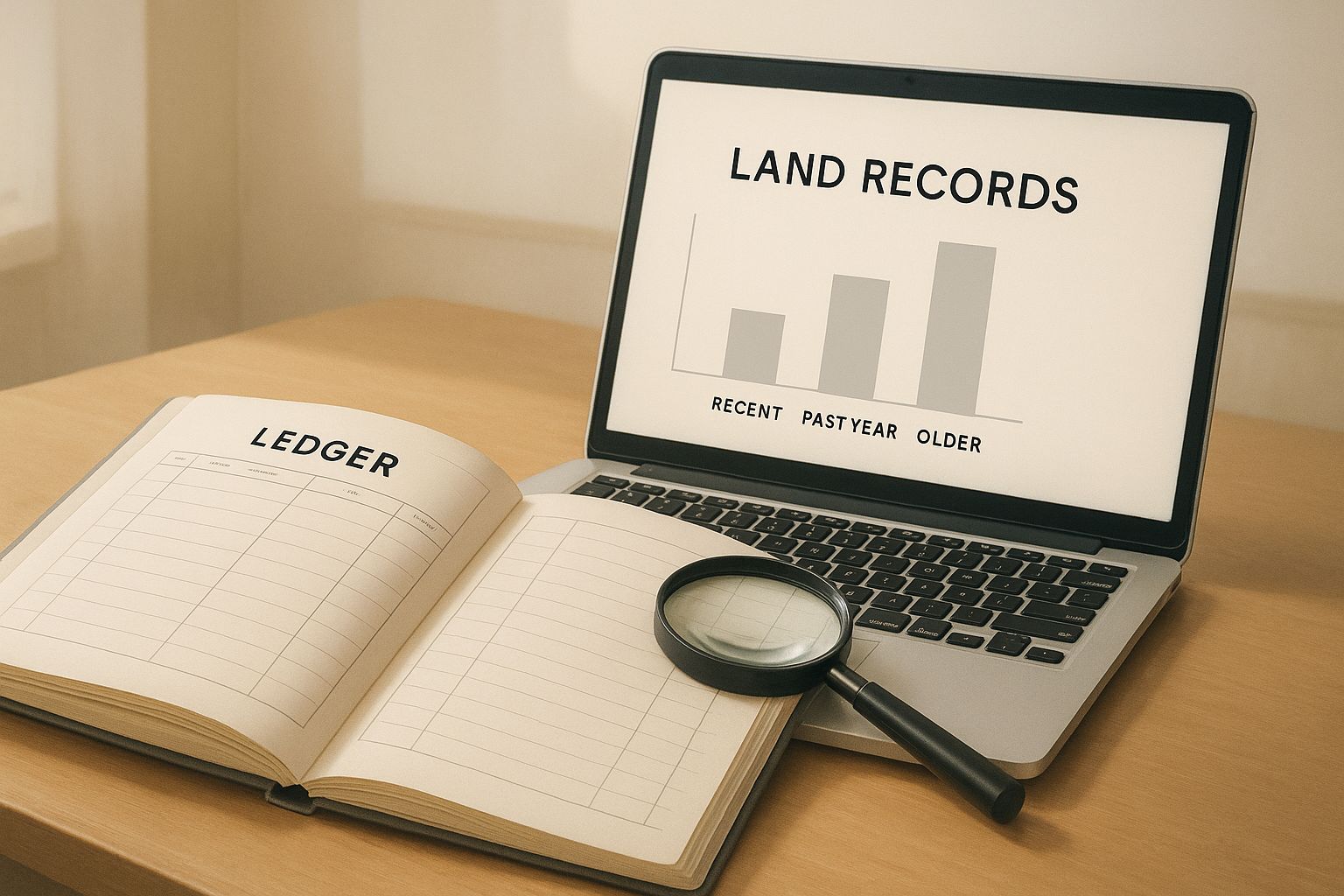
It’s this meticulous cross-referencing of every detail, from dusty old books to current digital filings, that ensures nothing gets overlooked.
More Than Just Liens
A pro isn’t just looking for outstanding debts. They’re on the hunt for a whole range of “encumbrances” that can seriously impact how the property can be used and enjoyed—things a basic search would almost certainly miss.
A truly thorough title examination will investigate:
- Easements: Does the utility company have a right to dig up the backyard? Can a neighbor legally use the driveway to get to their property?
- Covenants & Restrictions: These are rules baked into the property’s history that can dictate anything from paint colors to whether an RV can be parked in the driveway.
- Boundary Disputes: You’d be surprised how often a fence is a few feet off the actual property line. A professional search can spot discrepancies in legal descriptions that could lead to major headaches.
- Clerical Errors: A simple typo on a deed from 50 years ago can create a massive “cloud” on your title today. These are the kinds of mistakes that require an expert eye to find and fix.
This level of detail is absolutely essential, especially in complex fields like energy development. As our guide on the role of landmen in the energy sector explains, title histories can get incredibly complicated, and missing one detail can have huge financial consequences.
Deciding between a manual approach and leveraging modern tools can be tough. This table breaks down what you’re really getting with each option.
Comparing Lien Search Methods
| Feature | DIY Public Records Search | Professional Title Search |
|---|---|---|
| Cost | Free to low-cost (for document copies) | $150 – $400+ (varies by location) |
| Time | Can take many hours or even days | Typically completed within a few days |
| Accuracy | Prone to error; easy to miss documents or misinterpret jargon | High; backed by professional expertise and systematic processes |
| Risk | High; you are solely responsible for any missed liens or defects | Low; errors are covered by professional liability and title insurance |
Ultimately, while the upfront cost of a DIY search is appealing, the potential for missed issues makes it a risky gamble for any serious professional. A professional search provides a level of certainty and protection that is well worth the investment.
Title Insurance: Your Ultimate Safety Net
Once the exhaustive search is done, the title company issues a report. If everything checks out and the title is “clear,” you then have the option to buy title insurance. This is the final, critical layer of defense.
Title insurance is a one-time premium that protects the owner from financial loss due to past events. It covers things like undiscovered liens, forgeries, or undisclosed heirs that could pop up and threaten ownership long after closing.
Think of it this way: the title search is the inspection of the property’s legal history. Title insurance is the warranty that protects you if the inspector missed something. This one-two punch is what gives you and your clients true peace of mind, knowing the investment is secure.
How AI Is Modernizing the Lien Search
The old-school methods for finding property liens still work, but they’re built on a foundation of pure manual labor. It’s a slow, repetitive grind that’s wide open to human error.
Even a single overlooked document or a slightly misinterpreted record can blow up a deal, turning what looked like a sure thing into a costly nightmare. This is exactly where technology isn’t just improving the process—it’s completely changing the game.
AI-driven platforms like TitleTrackr are more than just an upgrade; they represent a fundamental shift in how real estate professionals operate. The days of spending hours, or even entire workdays, digging through fragmented county records are being replaced by workflows that deliver comprehensive results in minutes.
The Power of Aggregation and Intelligent Analysis
The real magic of these systems is their ability to pull in and make sense of massive amounts of data from countless sources, all at once. Instead of a person manually checking one database after another, an AI platform can scan county portals, tax assessor sites, court dockets, and other public record repositories in real time.
But it doesn’t just grab the data; it actually analyzes it.
Using sophisticated algorithms, these tools spot connections and flag potential problems that a manual review could easily miss. Think of a minor name variation on a deed or an old judgment that was never properly released.
For instance, an AI might find a judgment lien filed against “Robert Jones” and instantly cross-reference it with a property owned by “Bob Jones” at a shared previous address. It flags that potential link—something a human researcher under pressure might skim right past. This kind of deep analysis dramatically cuts down the risk of hidden encumbrances popping up later.
Speed and Accuracy at Scale
For any real estate professional, the most obvious benefit is the incredible boost in speed and efficiency. A search that once took up your entire day can now be finished in the time it takes to grab a coffee. This acceleration means you can handle a much higher volume of transactions with far more confidence.
- Unmatched Speed: What once took days of painstaking research can now be done in minutes. This frees you up to focus on what really matters—your clients and growing your business.
- Superior Accuracy: Smart algorithms are designed to catch tiny discrepancies and potential red flags that the human eye can easily miss, slashing the odds of expensive errors.
- Greater Confidence: You can move forward in any transaction with a crystal-clear understanding of a property’s title history, all backed by data-driven insights.
Modernizing the lien search process isn’t just about moving faster. It’s about being smarter, more accurate, and ultimately more secure in every single transaction you handle.
This technological leap is the logical next step for any professional who’s serious about reducing risk and running a more efficient operation. By automating the most tedious parts of the search, you can dedicate your expertise to interpreting the findings and advising your clients.
Platforms like TitleTrackr offer a path to not just keep up with the industry, but to lead it. Ready to see how AI can transform your workflow? Request a demo to experience the future of title research.
A Global View on Property Ownership Security
The headache of finding liens and ensuring a clean title isn’t just a local problem—it’s a global issue that impacts everything from market stability to individual property rights. While the paperwork and processes change from one country to another, the core need for clear, trustworthy property records is absolutely universal. Different legal systems have their own ways of tracking property encumbrances, each with unique strengths and, of course, weaknesses.

When you look at it this way, you realize the problem isn’t just a transactional hurdle. It’s a foundational piece of secure ownership everywhere. When records are a mess—fragmented, outdated, or just plain hard to get—it injects a massive amount of uncertainty into the system.
International Systems and Their Headaches
Zoom out to the international stage, and you’ll see a few different models for property registration. Some countries have a deed registration system, where the documents get recorded, but the government makes no promises about the title’s validity. This puts all the pressure on the buyer to do their homework.
On the flip side, you have nations using a title registration system (like the Torrens system), where the government actually registers and guarantees the title. It offers more security, sure, but it can also be painfully slow and bureaucratic. No matter the system, the same universal challenges keep popping up:
- Spotty Digitization: You’d be surprised how many countries still lean on paper records. It makes remote or quick searches a non-starter.
- Tangled Legal Frameworks: Trying to navigate a maze of inheritance laws, local customs, and competing lien priorities adds serious complexity.
- Scattered Data: Information is often locked away in different government silos—tax offices, courts, municipal agencies—with no single, central place to find it all.
This lack of clarity has very real consequences. A study in the 2024 Prindex Report found that around 1.1 billion adults across the globe feel insecure about their property rights. That feeling often comes down to the risk of an unknown lien popping up and threatening their claim. You can dive deeper into these trends by reviewing the full report findings.
The core problem is the same everywhere: without a transparent and efficient way to verify a property’s history, risk is baked into the process. This universal need is exactly why smarter, technology-driven systems are becoming so critical for any market.
Understanding these global hurdles really puts the value of modern solutions into perspective. An AI-powered platform like TitleTrackr is built to cut through these old-school limitations. It automates the heavy lifting of pulling data together and analyzing it, bringing clarity to even the most tangled title histories. Request a demo to see exactly how it works.
Got Questions About Property Liens? Let’s Unpack Them.
Even for seasoned professionals, digging into a property’s history can bring up some tricky “what-if” situations. These are the kinds of practical questions that pop up right in the middle of a transaction, and they can easily throw you off course if you’re not prepared.
Let’s tackle a few of the most common questions that arise in the field. Think of this as your quick-reference guide for navigating those nagging uncertainties.
How Long Does a Lien Stick Around on a Property?
This is a big one, and the answer is: it depends. The lifespan of a lien is dictated by the type of lien and state law. A mortgage lien, for instance, is simple—it stays put until the loan is paid off. A mechanic’s lien filed by an unpaid contractor, however, might only be valid for a year unless they initiate foreclosure proceedings.
Then you have judgment liens from lawsuits, which can often hang around for a decade and sometimes even be renewed. Federal tax liens are notoriously persistent, typically lasting for 10 years from the date they were assessed. Knowing these timelines is a huge part of evaluating the risk a specific encumbrance poses to a transaction.
What Happens If a Lien Pops Up Right Before Closing?
Finding a lien at the eleventh hour is a heart-stopping moment, but it doesn’t automatically kill the deal. The first thing to do is get everyone in the loop immediately—the seller, both agents, and the title company.
What usually happens is the closing gets pushed back. The seller is almost always responsible for clearing the lien, and the settlement agent will use funds from the sale to pay off the debt. Now, if the seller disputes the lien or just doesn’t have the money, the deal could be in real trouble. That’s when you’ll need legal advice to figure out the next steps.
The discovery of a last-minute lien highlights the immense value of a thorough, professional title search conducted early in the transaction. Rushing the process or relying on a surface-level check invites these kinds of high-stakes surprises that can derail an entire deal.
For more deep-dives into specific scenarios, our comprehensive FAQ page covering various title-related topics is a great resource.
Can You Actually Sell a Property That Has a Lien on It?
Technically, yes, a property can be sold with a lien still attached. But it’s rarely a good idea for the buyer. For one, most mortgage lenders will flat-out refuse to finance a property that doesn’t have a clear title. It’s a non-starter.
In a cash sale, a buyer could agree to take on the lien, which means they’re now on the hook for that debt. This is a risky move and typically only happens in distressed property sales where the buyer has already baked the cost of the lien into their offer.
Stop wasting time on manual searches and start getting faster, more accurate results. TitleTrackr uses AI to automate the most tedious parts of title research, giving you the clarity and confidence to close deals efficiently. See how you can boost your productivity by up to 90%.
Request a demo of TitleTrackr today!
 blog.titletrackr.com
Leave a comment